



On3: House settlement hammers home need for collective bargaining agreement
From today's On3 NIL newsletter:
In the wake of the long-form House v. NCAA settlement agreement – submitted to federal court Friday – the need for a fully negotiated collective bargaining agreement for the top-tier of college sports has never been more apparent.
Even with a landscape-shifting revenue-sharing model poised to enter college sports in fall 2025, sources said, the extent to which the NCAA remains hellbent on trying to limit some forms of athlete compensation – and without athletes present at the negotiating table – smacks of the same antiquated thinking that put the NCAA on the wrong side of antitrust law in the first place.
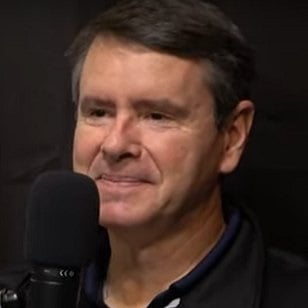
"I really hope this big first step of the settlement that [enables] schools to now share money with athletes has a next phase before next year, when the money starts getting shared, that includes the athletes negotiating for themselves," Jim Cavale, founder of Athletes.org, told On3.
To be clear, if athletes wish to agree to only so-called "true NIL" deals, secured through third-party collectives, in a negotiation process, they have every right to do so. It should be a bargaining chip, one athletes can play at their discretion through collective bargaining.
But for the House case to implement such compensation restrictions – especially without the voice of future college athletes – sources said, serves as an open invitation for more lawsuits and potential athlete opt-outs from the agreement.
"I'm concerned, because the athletes aren't involved in the setting of those terms," Cavale said. "But if the athletes were to agree to that because they felt, as a whole, they were going to recoup that same money plus more guaranteed money because it's coming from the school and not a collective and they were willing to give that up – that would be one thing.
"But just saying 'You're giving that up?' That's not how this works. That's how transfer rules were eliminated, because schools and conferences and the NCAA chose to set them up without the athletes agreeing to it."
Over the last three years, the absence of a clear, enforceable NIL policy has fostered a system in which payments from collectives to athletes – specifically in football and men's basketball – for recruiting and retention efforts have become commonplace.
The effort to eliminate that through the House settlement entails stipulating that all third-party NIL deals of $600 or more be approved through a newly created clearinghouse that will vet the contracts using fair market value standards.
Deals not approved could result in a third-party enforcement mechanism ruling that those affiliated athletes are ineligible and/or fining their schools.
One prominent industry source said to consider where college sports was for decades and where it is going with a more professionalized financial model. Using this settlement to make that monumental transition, they said, is akin to "turning a camper into a houseboat."
"I suppose it could work, but everyone would prefer to have started from scratch and built something made for water, versus form-fitting something not actually intended to be used in this way," the source said.
"My money is still on employment and a CBA at some point in two to five years. I don't see this framework being long term given how it is constructed."
The plaintiffs' attorneys – Jeffrey Kessler and Steve Berman – "did their very best to find a middle ground with the NCAA and power conference commissioners to get revenue sharing to happen, and I'm excited about that," Cavale added.
"But all the things within those terms are things that athletes need to be able to negotiate, not just be told this is how it's going to be now because we're giving you a revenue share." – Eric Prisbell
** Edited by Will Stewart at 7/29/2024, 8:52:43 AM
Posted: 07/29/2024 at 08:52 AM ET
Thread Replies (18)

On3: House settlement hammers home need for collective bargaining agreement
◄
-- Will Stewart Jul 29, 2024 at 08:52 AM ET
Jul 29, 2024 at 08:52 AM ET
Will Stewart
•
07/29/24 08:52 AM ET
•
07/29/24 08:52 AM ET

Sounds like they want “no” guard rails for income, no salary cap, nothing.
-- Stech
Jul 30, 2024 at 07:54 AM ET
Stech
•
07/30/24 07:54 AM ET
The most important thing I was saying was “no” guard rails to income, not
-- Stech
Jul 30, 2024 at 01:16 PM ET
Stech
•
07/30/24 01:16 PM ET
Quite right - the NFL should be paying for player development
-- Marooned
Jul 30, 2024 at 09:48 AM ET
Marooned
•
07/30/24 09:48 AM ET
The colleges don't want that any more than the NFL.**
-- reestuart
Jul 30, 2024 at 05:50 PM ET
reestuart
•
07/30/24 05:50 PM ET
The problem isn't NFL versus college, the problem is the top of college
-- wwhokie1
Jul 30, 2024 at 11:07 AM ET
wwhokie1
•
07/30/24 11:07 AM ET
What? They should pay the colleges? If you don't want a program that feeds
-- Big12 guy
Jul 30, 2024 at 10:30 AM ET
Big12 guy
•
07/30/24 10:30 AM ET
Baseball and hockey minor leagues have evolved over 120 years
-- PadrosWindup
Jul 30, 2024 at 08:50 AM ET
PadrosWindup
•
07/30/24 08:50 AM ET
PE firms are buying up minor league baseball teams
-- mancunian
Jul 30, 2024 at 05:39 PM ET
mancunian
•
07/30/24 05:39 PM ET
Exactly, the pro leagues have a vested interest in keeping
-- Marooned
Jul 30, 2024 at 05:22 PM ET
Marooned
•
07/30/24 05:22 PM ET
Just a fancy way of saying if you can get it for free, you won't pay for it**
-- Stech
Jul 30, 2024 at 11:50 AM ET
Stech
•
07/30/24 11:50 AM ET
If they'd have had some sort of warning ahead of time and time to prepare.
-- reestuart
Jul 29, 2024 at 01:41 PM ET
reestuart
•
07/29/24 01:41 PM ET
The big word missing from this is BOOSTER
-- PadrosWindup
Jul 29, 2024 at 10:28 AM ET
PadrosWindup
•
07/29/24 10:28 AM ET
The NCAA is in danger of chopping off their own legs
-- HokieAl
Jul 29, 2024 at 09:21 AM ET
HokieAl
•
07/29/24 09:21 AM ET
And that’s where Congress and the IRS get interested **
-- Hokie1992
Jul 30, 2024 at 06:43 AM ET
Hokie1992
•
07/30/24 06:43 AM ET
NCAA is not chopping off their legs, the courts have already chopped them.
-- Stech
Jul 29, 2024 at 03:44 PM ET
Stech
•
07/29/24 03:44 PM ET
The Antitrust lawsuit chopped off it's head. The NCAA is no longer
-- VTreddog
Jul 29, 2024 at 12:50 PM ET
VTreddog
•
07/29/24 12:50 PM ET
“Let’s call it a draw” — MP&THG**
-- AlaHokie83
Jul 29, 2024 at 12:55 PM ET
AlaHokie83
•
07/29/24 12:55 PM ET