


1) Do you see Franklin, if he is successful in his first two years and wins a lot of games, pushing for and getting funding for a football-only building like he did at PSU? — SCHokie1103
Chris Coleman: I think James Franklin will push for a lot during his time at Virginia Tech. He’s a very driven person, and he demands that everyone around him is driven as well. He’ll always be pushing for whatever he feels is necessary to get over the next hump. Whether or not a football-only building is part of that push remains to be seen.
If it does happen, I think it’s more likely to be further down the road. He’s basically turned the Merryman Center into a football-only building. Since his arrival, only football players and football employees are allowed to enter the building. Offices of non-football people have been moved, with some people temporarily working out of the suites in Lane Stadium for now. (I have no idea where they’ll put those folks long-term.)
The new Merryman rules extend to fans as well, even the ones with big money. In the past, everyone who had a courtside table for basketball went through the Merryman Center doors, walked through the hallways through Merryman and into the Jamerson Center, all the way through to Cassell. Those people are no longer allowed to use that entrance. You’ve got to be pretty well-off to buy one of those tables, so that means even six- and seven-figure donors are being rerouted through the side of Cassell.
For everyone who has wanted a football-only facility, well, James Franklin has given you one. It’s not a brand spanking new one with waterfalls and swimming pools, but it’s football-only nonetheless. We here at TSL, and you on the boards, have racked our brains for years about where to put such a facility, how big it should be, how much it would cost, etc. Franklin went Occam’s Razor on us all and found the simplest solution.
Is it viable long-term? I guess that depends on your definition of long-term. I’ve worried for some time that Jamerson/Merryman would eventually run out of space for the demands of a modern athletic department, and it appears that is finally the case. I think the facilities were borderline busting at the seams before, but now the dam has finally burst. Can you patch it up in way that can work, or do you need to build a new dam?
I don’t know. I’m not trained in anything like that. But I will say that space is an issue. The great thing about the Virginia Tech athletic region is that everything is close together, but that’s also the worst thing about it because of the lack of space to build new things.
Some people suggest rebuilding the north end zone of Lane Stadium to make it a modern stand and attach the facility to it. Plenty of schools do that. However, I think the construction zone — and perhaps the facility itself — would wipe out a large chunk of the practice fields. Not to mention the access road between Lane and Merryman that is required by state law. Turning it into a construction zone would wipe out that road, which would violate state law. So a new road would have to be cut elsewhere.
You could put it where the track is now. But where would you move the track? You could put it where the lacrosse and soccer teams practice. But where would you put their new practice fields?

Tech also needs a new basketball arena. I love Cassell, but it’s old, and if you’ve been to any modern facility in the last 10-15 years, you can probably recognize all of the faults Cassell has. There’s no arctic entrance, so all the metal detecting is done outside, which is brutal if it’s pouring rain or freezing cold. Walking around the arena is a really tight fit. And the color of it makes it really difficult to clean, which means it constantly looks dirty and run-down on the outside.
If you gutted Cassell and renovated it, or you built a new coliseum on the same spot, the basketball teams would have to play in Roanoke for a year or two. I think that should be completely avoided if at all possible. There would be no home-court advantage. Georgia Tech’s program has gotten worse since they gutted the old Thriller Dome for a reconstruction and shared an arena with the Hawks for a year. Their fans just don’t seem passionate about their program anymore. If you take something away from somebody, even for a year, you run the risk of some of them not coming back.
I’d be an advocate of building a new basketball arena somewhere else on campus. I’m not exactly sure where, but somewhere that is still convenient for students and fans. After that arena is built, Cassell could be torn down and a new football-only facility could be built there. Or, if you are creative enough, maybe you could combine the two. I don’t know. My brain isn’t wired for engineering.
All of that would be awfully expensive and would require the hiring of some big-time fundraisers (who need to be hired whether or not new buildings go up). It would also require some aggressive selling of naming rights for the new arena and new practice facility. JMU got $2.25 million out of Atlantic Union Bank for its new basketball arena, so Virginia Tech playing in the ACC should theoretically be able to get more than that. (It’s notable, though, that it’s no longer Atlantic Union Bank Park at English Field. The organization isn’t sponsoring it anymore.)
That’s the other thing: JMU now has a nicer arena than Virginia Tech. So does VCU. So does ODU. Falling behind those smaller schools, who play in much smaller leagues, makes the program look bad. If you want to be big-time, you have to make the effort. So count me among those who believe Cassell should be replaced completely (unless they can find a way to gut it and totally renovate it without playing in Roanoke for 1-2 years). It’s taken me a little while to completely come around to that view, but here I am.
And yes, I understand the challenges of paying for all of that in the NIL and revenue-sharing world. Tech would have to raise as much money as possible and finance as little as possible. It’s yet another reason why I believe that a fully functional, efficient and well-staffed Hokie Club is more important than anything for Virginia Tech’s future.
2) What do you think Franklin’s target for wins is this year, and how will he respond to the media when there are losses? — OlderHokie
CC: You think Virginia Tech is going to lose games this year?
If you’ve been entrenched in a role for some time and know your personnel very well, then it’s likely those coaching staffs can kick back in the meeting room and say, “Yeah, we should really win 10 next season with our schedule and everybody we’ve got coming back.”
However, that scenario doesn’t exactly describe Franklin’s current situation at Virginia Tech. He brought some Penn State coaches and players. That part is true. But he also inherited a bunch of players he doesn’t know much about yet, he’s got a few guys on his staff that he’s never coached with before, and even his PSU high school recruits have either not enrolled or are in the middle of their first month of college. He’s still got so much to learn about this team that I doubt he’s got a win total in his head.
Personally, I’ve got a goal of eight wins this year. But I don’t get paid to worry. Franklin does. He’s going to see every fault that the team has before anybody else can see them. But he hasn’t seen many of those faults yet because spring ball hasn’t started, and the team has only been through two winter workouts in the indoor facility. I think those workouts are going well, but the true flaws won’t be exposed until the pads go on. He’s going to learn a lot, but the real learning won’t begin until mid-March.
He’s also got some stuff to learn about himself. Getting fired was a shock to his system. In a meeting with the team last month, he told the guys he brought in from Happy Valley, “I’m not the same [bleeping] guy I was at Penn State.” That line is in the video below. Point being, everything is new, even parts of Franklin himself.
I don’t think he had the best experience with the media at Penn State. The media at some schools can be brutal. There were even two Penn State media members at his introductory press conference at Virginia Tech. Even after he was fired, the media from up there didn’t stop writing about him until he landed somewhere else.
One thing he’ll learn — or at least I hope he learns — is that the media at Virginia Tech won’t be out to get him nearly as much as the PSU media. I know some of you get on us for not asking the “hard questions,” but you can’t do that too much. The only thing it usually accomplishes is creating bitterness between the coach and the person who asked the question, and whatever issue there is (if there is one) doesn’t get solved.
I know he wasn’t media, but see the Jason in Arlington interaction and Frank Beamer’s “you’re outta whack” moment on Tech Talk Live so many years ago. It was a fair question, but it served no purpose. All it did is fire Frank up and probably make him dig his heels in even more.
Franklin won’t get nearly as much treatment like that at Tech as he did in State College. First, the media around here simply isn’t as harsh. Second, there just aren’t that many of us. TSL attends media sessions, as does The Roanoke Times. Sometimes David Teel makes it to town from Newport News. Tim Thomas from The Tech Lunch Pail will show up. But that’s pretty much it outside from a couple of students, including Kolby Crawford, who works for 247Sports.
I’m hopeful that Franklin will let his guard down a little bit once he realizes that not everybody is out to get him. But sometimes I also believe that all football coaches have a hidden paranoia clause built into their contract that pays them more money the more disengaged they are from the media. So we’ll see.
3) Not too many years ago for VT hoops, “We need a system coach” was a pretty widely stated opinion. VT’s basketball reputation wasn’t good enough to recruit like UNC, Duke, etc. Therefore, we needed a guy who could take GOOD players (but not great) and put them in a consistent system where the better execution and teamwork would overcome the talent deficit. Mike Young was/is THAT guy. But now that NIL and pay-for-play is fully here and out in the open, can a college coach succeed consistently as a system coach? — Late 80s Hokie
CC: I never played competitive basketball. I was too busy spending my winters doing offseason training for football. (Speaking of which, the reason Shamarius Pekerkin is listed as “out” for all of Tech’s recent hoops games is because he’s rejoined the football team and is going through the winter workouts). So from an X’s and O’s standpoint, I’m extremely limited when it comes to basketball. I can tell you the difference between cornerback, outside linebacker and inside linebacker because I’ve played them all. But I’ve never played hoops, so I’ve never been asked to hedge a screen, so I had to Google it to find out exactly what it is (I’m serious).
So, I’m going to keep this very general and generic. I think all coaches have a system, but it can vary by coach how married they are to that system, how tweakable the system is and how difficult it can be to pick up and understand. I know that Mike Young runs a lot of secondary actions off his primary actions, but that’s about all I can tell.
This next part is just an opinion, but I think Young has let his players play more freely this year. That’s what so many fans wanted, at least those who post on our free basketball board, but I don’t think it has worked. I think Neoklis Avdalas and Amani Hansberry are such good passers that he wanted (or was convinced) to give them more freedom this year.
However, the overall athleticism of this team isn’t the best across the board. Tobi Lawal can jump through the room, and Ben Hammond is one of the quickest guards in the country. But overall, as a team, I don’t think this is a group that should be playing free, and I think they’ve played a bit too fast at times. I think they would have benefited more from being a little more “systematic.”
Here’s the adjusted offensive efficiency numbers of all his VT teams:
• 19-20: No. 147
• 20-21: No. 59
• 21-22: No. 17
• 22-23: No. 31
• 23-24: No. 37
• 24-25: No. 185
• 25-26: No. 80
This is the third-worst offensive team of Young’s tenure, just judging by that metric. Virginia Tech’s guards this year are a lot more athletic than Storm Murphy was in 2021-22, and that team didn’t have anybody who could jump through the room like Tobi Lawal. Yet, it blew the doors off this year’s team from an offensive efficiency standpoint.
It’s true that the 2021-22 group shot it better from the outside than any of Young’s other teams at 39.2 percent (No. 3 in D-I). Yet, the 2023-24 team shot 34.8 percent from 3-point range, which is worse than this year’s 35.4 percent, and still finished No. 37 in adjusted offensive efficiency.
I wonder if Young was worried that with a bunch of new players, it would take them too long to really jell within the system, so he gave them more freedom. I really don’t know, I’m just speculating. As I said, this part of the answer is just guessing on my part.
We know that Young's system is an absolutely beautiful thing when operating at peak efficiency. The Hokies didn’t just beat North Carolina and Duke in the ACC Tournament. They systematically took them apart and won easily. But is it too difficult to reach that level of peak efficiency? I don’t know, but it sure seems like it.
I know that Tony Bennett ran a system-based program at Virginia, and as the transfer portal and NIL became more and more of a factor, his results got worse. It probably made it more difficult for him to acquire and keep players. It probably also meant that his heart wasn’t fully in it anymore. I think that second part is factual, considering his early retirement.
I’m sure Ryan Odom has his own system. How strict it is and how difficult it is to learn, I’m not sure, but whatever it is sure seems to be working. I can imagine Young feeling a lot of the same things that Bennett felt.
I don’t think I really have an answer for you, but I included your question because I really liked it. I think it’s worth looking into for those who know a lot more about basketball X’s and O’s than I do.
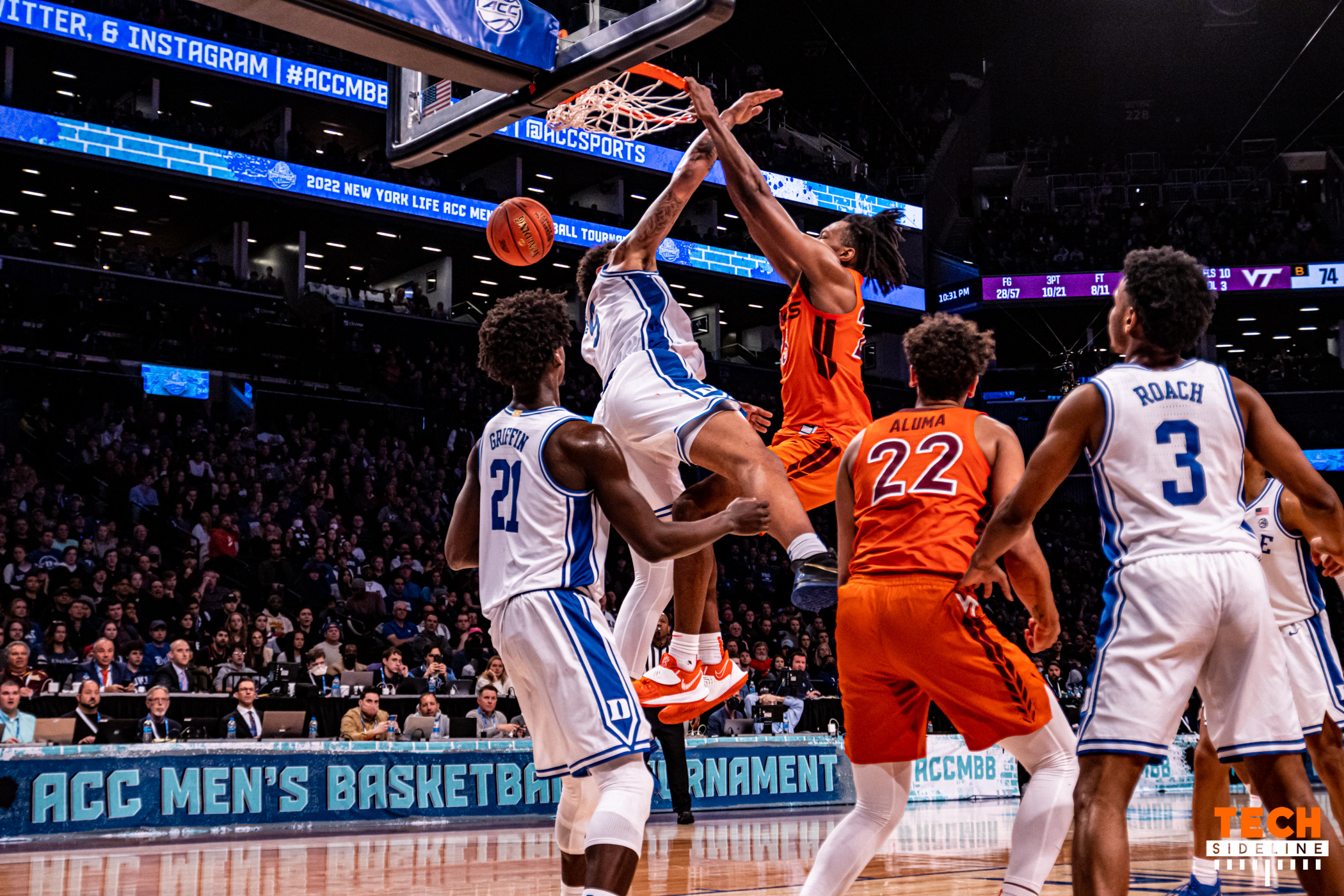
4) Why are so many people upset when VT basketball plays to its norm? We all want Tech basketball to win. It always stings when they lose, and this team is particularly good at losing in a way that enhances the sting. That said, what are the reasonable expectations for Hokie basketball? Are they not being more or less met?
Living in Pittsburgh, I have this conversation with Pitt fans all the time. They badly want rid of Jeff Capel, with some measure of justification. But too many people up here think of Pitt basketball the way it was under Ben Howland and Jamie Dixon. Pitt was really, really good in those years. It enjoyed the benefit of very good coaches, playing in the right league for purposes of recruiting and generating local interest and having a brand new building for its games. Pitt was probably a top-10 program for a stretch.
But that’s not who Pitt basketball really is. Historically, Pitt basketball is pretty similar to Tech, if not a smidgen more successful. Some good teams periodically. A handful of really good players scattered over the years. And a lot of tourney disappointments. It’s really hard to elevate any college program above its historical mean and keep it there. (See Virginia Tech football.)
What facts exist today that didn’t exist in the 1980s when Charlie Moir’s teams were often on the fringe of the tourney? What are the true, reasonable expectations for Hokie basketball? — Tailgate Guru
CC: As far as NCAA Tournament appearances go, I thought Andy did a great job of summing things up in his Thursday mailbag.
“What’s a reasonable expectation for a program of Virginia Tech’s resources in an ACC that is usually pretty good in hoops? It’s tough to say. Here’s how many times each ACC school has made the tournament since 2019-20, Young’s first year, applying a projection about this year’s bracket:
-
- 5 — Duke, North Carolina
- 4 — Clemson, Virginia
- 3 — Miami, NC State
- 2 — Virginia Tech, Louisville
- 1 — SMU, Florida State, Syracuse, Notre Dame, Pitt, Georgia Tech
- 0 — Cal, Stanford, Boston College, Wake Forest”
Growing up in the era of Dave Odom at Wake Forest and Bobby Cremins at Georgia Tech, I never would have thought it would be possible that the Hokies could make more NCAA Tournaments than the Demon Deacons and Yellow Jackets. You’re more impressionable as a youth, so I grew up believing that Wake and GT were really good basketball programs; not just teams with really good coaches.
Time has proven me to be wrong. There is nothing about either program that naturally made them better when I watched them play. They were just really well-coached, plus the ACC dedicated more resources to the sport relative to the competition back then. Now they aren’t so well-coached, and the SEC and Big Ten have caught up and passed the ACC when it comes to fiscal investment.
I’m disappointed that the Hokies will most likely miss the NCAA Tournament for the fourth consecutive season. That’s my close-up view right now. However, from the big picture view, had you told me in the fall of 2017 that Tech would make five NCAA Tournaments out of the next nine that were played, I wouldn’t have believed it. I would have taken it in a heartbeat, and I wouldn’t have cared if it was five in a row or one every other year. So while I’m disappointed right now, I have to check myself by noting that I would have taken these results in a heartbeat a decade ago.
And guess who I credit for that? Whit Babcock. I think he was slow to react to NIL, which resulted in last season’s results, but the main reason we are disappointed right now is because of the success we had just a few short years ago under both Buzz Williams and Mike Young. Unlike past Tech athletic directors, Whit actually tried to be good at basketball. That was important because we needed to know exactly how good this program can be when the administration tries.
Now we know, though admittedly the situation has changed a lot with NIL and free transfers. More money than ever is required to compete. But we know Tech can be good if properly funded, even if the definition of “properly funded” has changed a bit over the last few years.
In Babcock’s presentation to the Board of Visitors in August, it showed that Virginia Tech was dead last in the ACC amongst public schools in men’s basketball expenses. Conversely, the Hokies were first amongst public schools in women’s basketball expenses. Here is that slide:

From that standpoint, Tech is getting more than it is putting into the men’s program. That’s just the basic operating budget. We don’t know enough about the NIL budgets to make comparisons, but we can safely assume that Tech is behind Duke, North Carolina, Virginia, Louisville, SMU, NC State and Miami. You can probably throw Clemson and Syracuse in there as well. I don’t know about the rest.
That doesn’t mean that level of investment will be there forever, though. As we know, there’s about to be a big cash injection for the athletic department. Not every ounce of that will go to football. I think it’s likely that the men’s basketball budget will increase as well. How much, I don’t know.
As far as expectations go, the only thing I can say is that this program can be successful under the right set of circumstances. For me, making the NCAA Tournament 40-50 percent of the time should be the goal. However, when you consider that over half the ACC has failed to make the tournament even a third of the time in recent years, that might be slightly too high an expectation. Expectations are different than goals, though. I think my goal is 40-50 percent, though that could change depending on the future budget.
As to your final question about Charlie Moir’s program, that’s a totally different era. Take Dell Curry for example. He was a McDonald’s All-American from Fort Defiance High School. The 2026 version of Dell Curry wouldn’t be attending Fort Defiance. He’d be at a top basketball factory.
For example, I just randomly looked at the top-10 recruits from the 2020 class, and 40 percent of them came from just two schools: Montverde (FL) and Sierra Canyon (CA). Three of the top 22 actually went to Montverde. Two of the top 18 went to IMG Academy (FL). Those top guys play nationally before they even get to college, so they aren’t likely to play where they grew up, unless they grew up around a blue blood.
The other advantage that Tech had is that the staff went to 30 of Curry’s games when he was being recruited, both basketball and baseball. You could do that for a local recruit from the Harrisonburg area; you can’t do that if he’s at Montverde. Not to mention that the modern rules don’t permit you to watch that many games in person.
So much has changed in recruiting over the last 40 years that I don’t think it’s wise to try and compare the two eras. My guess is that Young would have won more games back then, but there’s no way to prove it.