


This one was pivotal to the mindset of Hokie Nation, and it didn’t go well, to say the least. As I think about what to write/say here, I’m resisting the urge to go off the deep end and make big pronouncements. It’s still early in this coaching staff’s tenure, and certainly there are some warning signs (cough – 15 penalties again – cough), but caution and more data are needed, not to mention hope for improvement.
After all, what’s the alternative? To believe that this team won’t rush for over 100 yards against any remaining Power 5 opponents, and will thus struggle to win again? That’s a dark turn I don’t want to take yet because we’re only four games in. If we all want to keep our sanity, we’ll have to let more games play out.
That doesn’t mean I don’t have my concerns, and we’ll eventually get to them. But let’s talk about the game a little first.
Can You Win a Game Like This?
I’ve seen some discussion of the calls that went against Virginia Tech, the plays the Hokies didn’t make, the bounces that didn’t go right, etc. And the answer is, “It doesn’t matter. You can’t win when you get whipped in the trenches like this.” That’s true, but that shouldn’t invalidate bemoaning the missed opportunities and twists of fate along the way.
I had an interesting experience watching the Dolphins-Bills game Sunday. I’ve been a Dolphins fan for almost 50 years now, though admittedly the passion hasn’t been very strong for a while, especially since Dan Marino retired.
I do get sucked in every once in a while, though, and this year, I’m sucked in. Plus, I’ve hated the Bills ever since they started dominating Miami back in the 1990s, when the Phins last had a chance to win a Super Bowl. But they could never get by the Bills.
Lastly, the game was actually on my television yesterday, so I watched it, start to finish. It was a great game that the Dolphins ended up winning 21-19.
Why do I bring this up? Because the box score made me think about Virginia Tech football. Here’s a statistical summary:

Looks familiar, doesn’t it? Here’s the same stat breakdown for WVU-VT:

Total yards, rushing yards, first downs, time of possession … those stats are all very similar. Check out the plays run: Buffalo ran 90 plays to Miami’s 39, and WVU “only” ran 76 plays to Virginia Tech’s 53.
Yet Miami won by two, and Virginia Tech lost by 23. Yes, the Hokies were dominated in the trenches, especially Tech’s OL, but you can still put up numbers like that and win … if you don’t make a bunch of mistakes, don’t commit a bunch of penalties, and make opportunistic plays.
In Miami’s case, as good as Bills QB Josh Allen was, he made two critical errors: he fumbled inside his own ten-yard line, and the Dolphins cashed it in for a TD; and he missed a wide-open receiver for what might have been the winning touchdown on 4th and goal. That’s it. That’s why the Dolphins won a game they otherwise had no business winning. (Okay, the Phins defended well in the red zone, too.)
Oh, one other thing: Miami committed just four penalties for 20 yards and didn’t turn the ball over.
Ah, okay. Virginia Tech, on the other hand, committed 15 penalties for 132 yards and threw a pick-six.
You can win games like this. You just have to play smart, clean football.
Which leads me to a larger point: when you’re building a program, the first, best thing you can do is play as close to error-free football as possible. Virginia Tech hasn’t. They have two losses, and in those two losses they have committed 30 penalties and lost the turnover battle 3-6, including two turnovers for touchdowns.
None of this is to argue that Virginia Tech “should have won.” They shouldn’t have. But it’s valid to remember all the missed opportunities – Grant Wells overthrowing two wide-open receivers, Jadan Blue letting the ball hit him in the face mask, Keli Lawson failing to recover the muffed punt, VT defenders failing to make drive-ending tackles, and more – and think about what might have been.
I resisted the urge to compare that Dolphins game to the 1998 VT-Syracuse game. The stats are crazy similar (Syracuse ran 88 plays to 38 for VT), but if Virginia Tech had just made one more play in that game, they would have won.
Let’s move on.
The Running Game, or Lack Thereof
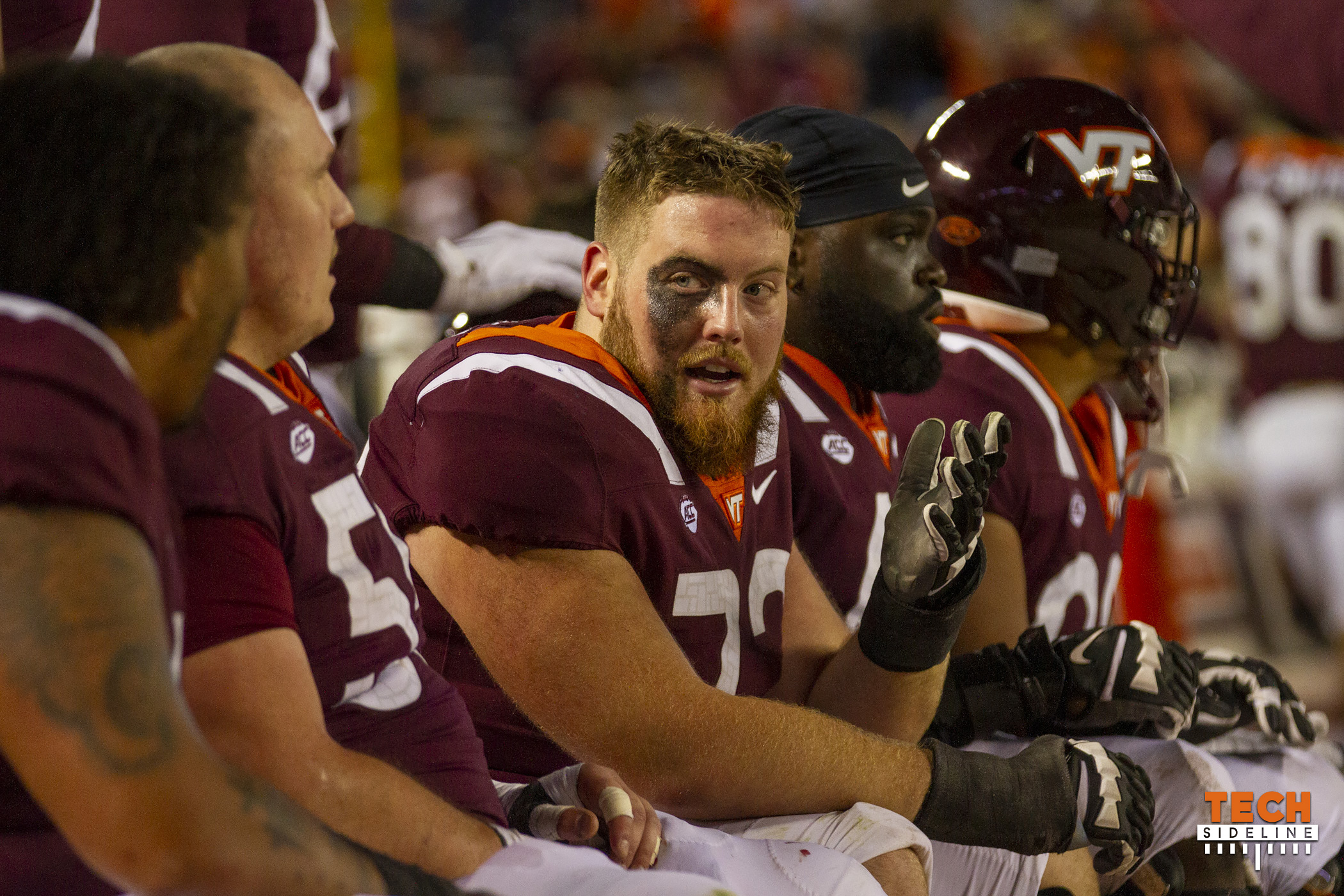
Okay, red flags are on full display here. The warning signs were there before this game, but now the alarm is sounding full-on.Most of you reading this are like me: you’re nowhere near being a football analyst. You can’t tell an inside zone blocking scheme from a man-blocking scheme from a … what are other blocking schemes even called?
This article is sponsored by Wedgewood Marketing, a digital marketing agency founded by a VT MBA '13 alumnus Alexis Assemat. Based out of Charlotte, we help businesses of all sizes with their online marketing efforts which includes: Search Engine Optimization, Google Ads, Facebook Ads, Web Development, and more! Contact us for a Free Marketing Audit at wedgewoodmarketing.com

But much like a person who can’t cook can tell when a meal tastes terrible, or someone who has never directed a movie can tell you when a movie is boring, we know a bad running game when we see it.
Looking at traditional metrics, Virginia Tech is ranked No. 110 out of 131 teams in yards per game (112 ypg) and No. 117 in yards per carry (3.13 ypc).
Beyond the lack of productivity, though, what I see happening on the field baffles me. Virginia Tech’s tailbacks – Keshawn King, Jalen Holston, and Chance Black – only carried the ball 11 times out of 53 offensive plays, but that’s not what confuses me. What confuses me is that if you search the box score for the following terms:
- King,Keshawn rush middle
- Holston,Jalen rush middle
- Black,Chance rush middle
… you get 11 hits. Every single tailback run was up the middle. That’s not a scorekeeping or statistician problem or error. They got it right. Every run was up the middle.
Just for grins, if you search “King,Keshawn rush middle” in the ODU, BC, and WVU box scores – he didn’t play against Wofford – you get 23 of 29 runs this season up the middle. His 65-yarder against Boston College was “King,Keshawn rush right,” and you remember seeing that one; it was off-tackle right.
There is some jet sweep action from Virginia Tech, but the ball never gets handed off. Virginia Tech’s non-running backs have two carries in four games, both by Connor Blumrick, both in the BC game, both from the Wildcat formation. (Per the box score, Blumrick took both snaps directly.)
I have seen little to no read option, with the exception of Wells’s TD run against ODU, six minutes into the game. There are probably more read-option plays that I’m not recalling, but there aren’t that many.
We’ve seen a few QB draws from Grant Wells, such as the ill-fated 4th and 1 in this game, but in general, there has been very little variation to the rushing game.
I’m not analyst who can tell you in technical terms what Virginia Tech is doing. All I’m doing is going on memory, searching box scores, and looking at stats. I’m also not advocating that the Hokies become Jet Sweep U, especially not into the boundary on third and long. But this currently is an easy rushing team to defend.
As a side note, here’s an interesting message board post from a guy who is a pretty good football analyst, Raleigh Hokie.
Here’s the punch line, or rather, the thing to watch: North Carolina’s run defense is ranked No. 123 out of 131 teams, giving up 216.5 yards per game. Hmmm … insert little thinking-man emoji here.
Virginia Tech Penalties
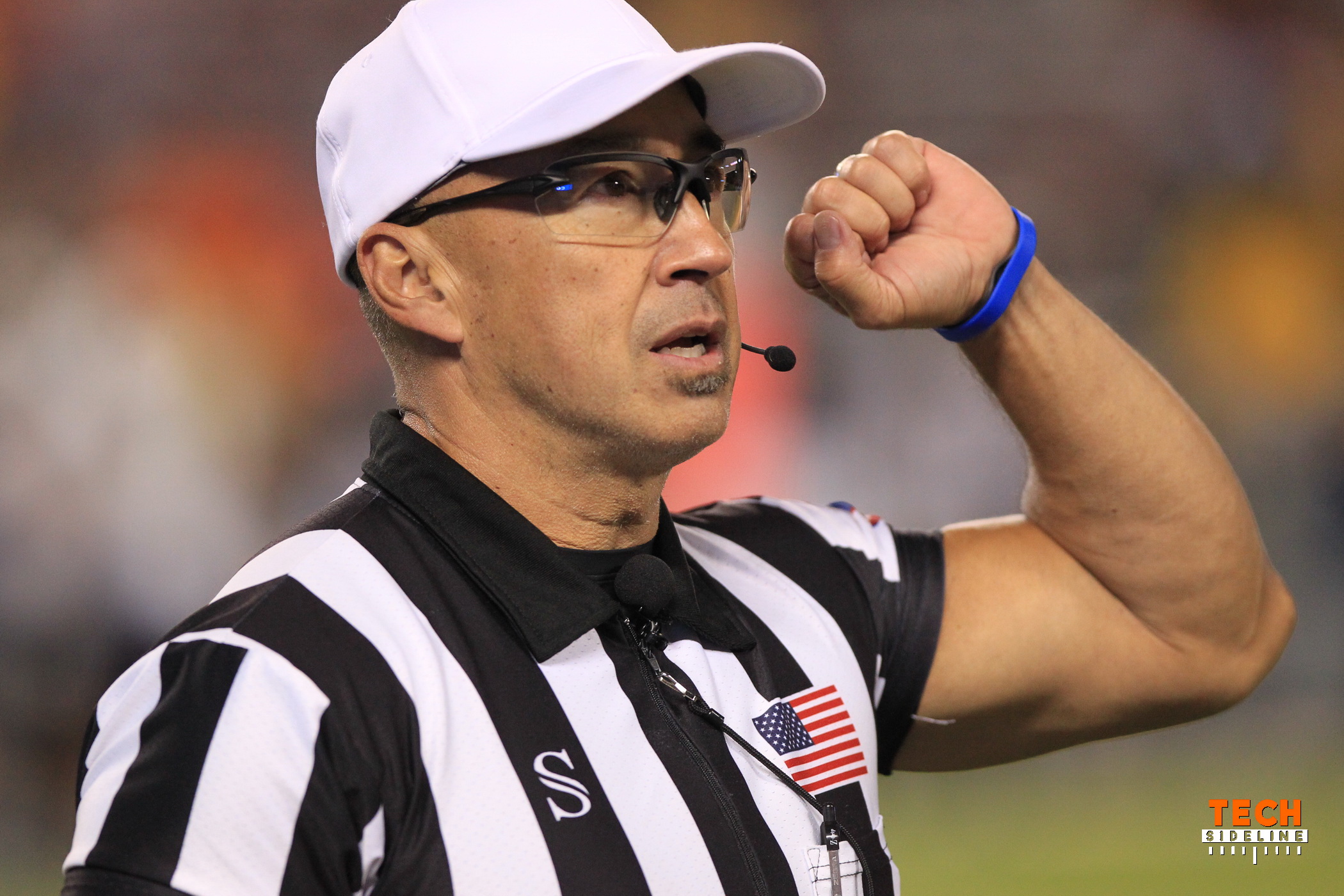
Here’s a “this didn’t age well” from my ODU Monday Thoughts, a game in which Virginia Tech committed 15 penalties:Likewise, the penalty numbers will come down for this year’s Hokies. Last season, the No. 100 team in the nation in penalties per game, Syracuse, committed just 7.00 per game. Teams don’t go around committing 15 penalties per game.
Yikes. Then the Hokies go out and do it again three games later, the only two times since 2005. I’m a big fan of statistical oddities, but I could have done without that one.Virginia Tech is currently averaging 10.0 penalties per game, No. 129 out of 131 in FBS. Last season (referenced in the quote above), Toledo finished dead last (No. 130) at …. drum roll, please … 10.0 penalties per game.
I’m more forgiving of penalties that are committed in the heat of the action, to a point. Dax’s roughing the passer penalty, which came on 4th down with the score close at 16-10, was critical, but it was a bang-bang play. I know some of you are saying, “He’s a captain, he went in too high, that was a stupid penalty,” etc., but man, things move fast out there, and I appreciate that he was trying to behead J.T. Daniels. I really do.
You can nitpick all you want as to what’s forgivable, what’s not, if something should have been called, and so forth. (The single most interesting stat I heard today is that this same Big 12 crew called 15 penalties on Alabama in their game with Texas, the most on Bama since Saban took over in 2007 … hmmm.) But eventually, you have to say, “It’s not you … it’s me.” If the problems persist and the Hokies remain one of the most penalized teams in the country, then that’s on the coaching staff, not the players or referees.
We’re not there (declaring a huge problem and blaming the coaches) yet, but we’re a lot closer than we were after that ODU game.
Speaking of penalties, one that really jumped out at me rewatching the game was Virginia Tech’s delay of game penalty that came with the Hokies leading 7-3 in the second quarter. Parker Clements false started, and the refs set the play clock to 25 seconds, per the rules. Virginia Tech lined up on offense and just … let the play clock run out.
Being unaware for the second time this season about when the clock runs, when it doesn’t, and how much time is on it is another red flag. The first came against ODU when 28 seconds ran off the clock late in the game, and I wrote about that:
It’s easy for us fans to criticize clock management, because we’re either watching on TV, or we’re in the stadium, and the clock is all we’re focusing on. But the sideline is controlled chaos, and it’s remarkable how often coaching staffs that are getting paid millions mismanage the clock. It’s not easy. Brent Pry learned his lesson, that there’s a blind spot there, a gap in the way they manage games, that he’ll need to figure out and close up.