

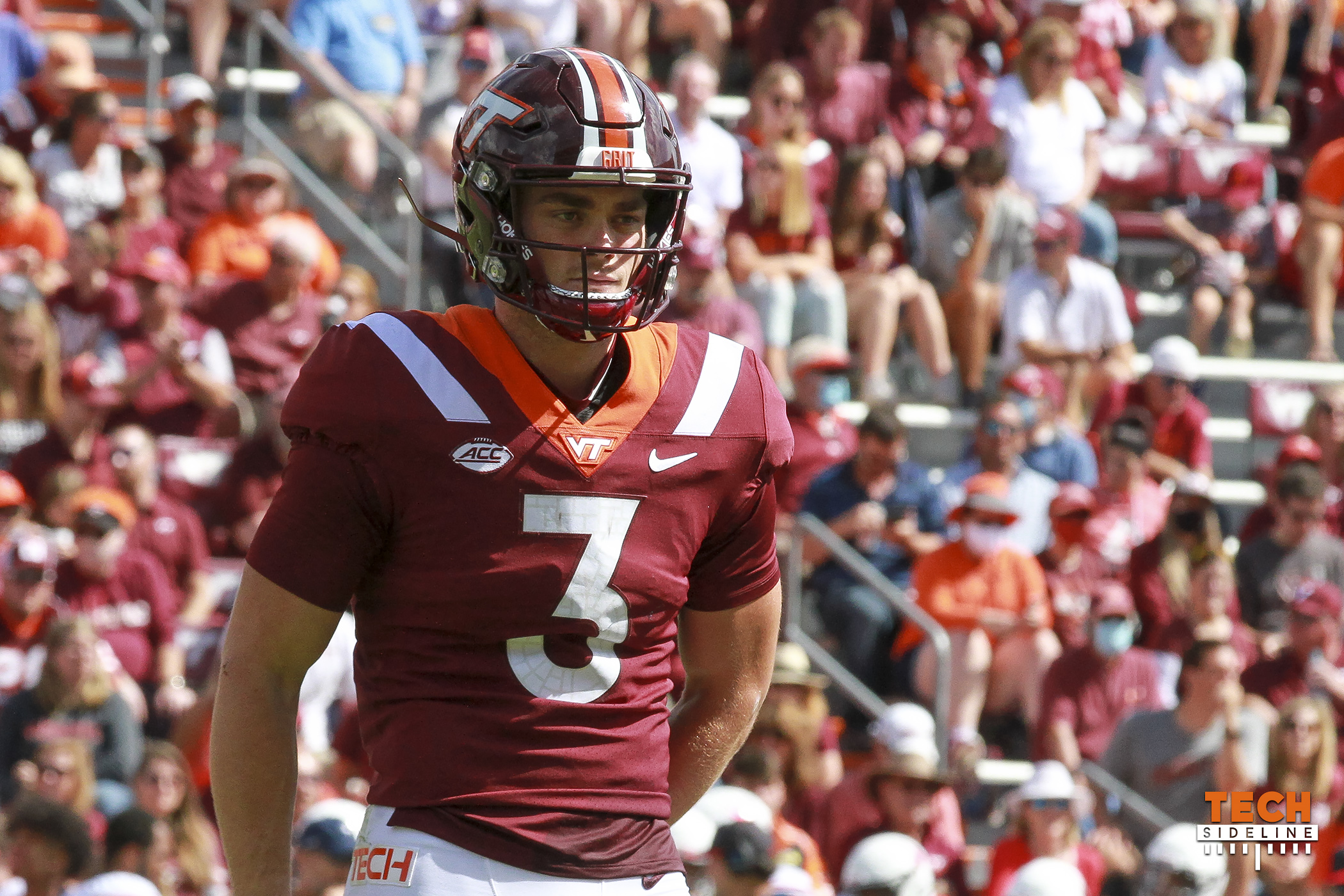
1) Looking forward, which position(s) concern you most for VT’s future seasons? – Ranger Sam
Chris Coleman: I would have to say, without even giving it a second thought, that quarterback would be my biggest area of concern for the future. Let’s say that Braxton Burmeister doesn’t return for a sixth season next year. Tech’s quarterback room would look like this…Knox Kadum (r-So.)
Connor Blumrick (r-Sr.)
Tahj Bullock (r-Fr.)
Alex Orji (Fr.)
The two most talented players on that list are Bullock and Orji, in my opinion, but both of them will be very young quarterbacks in 2022. Orji is having a great year down in Texas, but he’ll only be a true freshman. I like Bullock, too, but what if he needs more time in the oven?
Above those guys you have Knox Kadum and Connor Blumrick. I don’t think Kadum’s arm is strong enough, Blumrick couldn’t stick at QB at Texas A&M, and thus far Blumrick hasn’t been able to beat out Kadum. Burmeister has his flaws for sure, but as of right now I’d feel a lot more comfortable if he decides to return for the 2022 season.
If Burmeister doesn’t return, I don’t see how the coaching staff couldn’t take a serious look at bringing in a transfer quarterback, or a JUCO if there is one available at the level of Jerod Evans. I don’t think I’m comfortable at all with any of those other guys leading the charge at this point. Again, I definitely like the long-term potential of Bullock and Orji, but those guys are going to be awfully young in 2022.
My best guess right now is that Tech’s starting quarterback next season will either be Burmeister or somebody you’ve never heard of, but I could be wrong.

2) Other than funding, what is the biggest thing holding Virginia Tech football back? – 19DHokies
CC: Fans generally tend to focus on things that they can see, which is why playcalling and recruiting rankings get talked about more than anything else. It’s tough to talk about things that you can’t see, especially for anyone who has never played football and who doesn’t understand locker room culture, how players behave, how teams are run, etc. Yet those things we can’t see are more important, in my opinion.Virginia Tech is an inconsistent football program. They can score 21 points on the road against one of the top defenses in the country (WVU), and then put up just 14 offensive points against FCS Richmond the very next week. Defensively they can get trounced by Liberty one week, then smack Miami around for three quarters the next week, and later in the season go toe-to-toe with Clemson for three quarters. They can hammer NC State, and then struggle to move the football against Wake Forest. They can lose to Duke 45-10, and eight days later they are up 28-0 at Miami. They can outscore BC, ECU and UNC 137-20 over three consecutive weeks, and then get run around by a bad Syracuse team in the Carrier Dome in their next game.
People see inconsistency during the season and immediately talk about playcalling, recruiting and gameplanning because those are the things they can see. I’m here to tell you that individuals and groups of individuals who are inconsistent during the three months of the year where you can see them are also probably inconsistent during the nine months that you can’t see them. If you are inconsistent for those other nine months, then you aren’t going to magically flip a switch and get consistent during the season.
Yes, you can lose an individual football game because of a bad play call, or maybe because you got out-talented at a certain position. But if the inconsistency is a 5-year trend, then the problem is something deeper. And the thing is none of us can see it, because it’s all behind the scenes stuff. Accountability, discipline, expectations, and standards on a day-by-day basis is the key to winning football games. Obviously you still have to have the prerequisite talent and coaching, but without those four key things, recruiting and coaching won’t matter nearly as much.
Former Virginia Tech football player Jeff Holland told a story on the message boards recently about how he and JC Price were sat down by Mike Gentry after their redshirt year and told in no uncertain terms that if they didn’t start working harder they were going to get cut and lose their scholarships. They were not meeting the standards of a Virginia Tech football player. Gentry was holding them accountable, setting expectations for them, and that’s how discipline was handled in the Virginia Tech football program.
I don’t know how many conversations go on like that these days. I’m not sure that there is a true bad cop in the program. Gentry was loved, but he could be a bad cop if needed. John Ballein could certainly be the bad cop. Beamer rarely, if ever, had to be the bad cop, because he had other people who could do it for him. Justin Fuente is a nice guy, and I don’t think being a bad cop is in his nature, but I don’t think Beamer was that type either. Unfortunately, Fuente doesn’t have anybody around him to take on that role, in my opinion.
When Frank Beamer almost got fired in 1992, besides hiring some new assistant coaches, one of the things he did was visit his mentor – Bobby Ross – and ask for advice. As it turned out, where Frank had been struggling the most was with discipline in his program. He had players on the sidelines talking to fans in the crowd. He had players saying they couldn’t practice because they were “hurt” yet magically they were fine on Saturdays. Etc.

This article is sponsored by The Southeast Regional Training Center (SERTC). The SERTC is creating Olympic wrestling opportunities! Assist us in attracting the best recruits in the nation! Your support and contributions will help bring more OLYMPIC HOPEFUL training partners and mentors to Blacksburg, Virginia. Click here to learn more and to donate today!
Fortunately the book Turn Up The Wick is still an excellent source for things like this. On page 123, Chapter 16 is entitled “20 Steps To A 7-Game Turnaround” where Beamer describes the offseason changes he made to the program that enabled them to move from two wins in 1992 to nine wins in 1993. I won’t go over all of them, because I don’t think all are applicable to today’s game. But I’ll note a couple.
1) Punishment. If a player messed up – was late for practice, skipped class, or whatever – he got 6am Sunrise Service with Mike Gentry. One thing I heard last year was that Darryl Tapp tried to discipline one of his players for being late to a meeting (Zion DeBose), and the player was surprised and resentful because he had never been disciplined before for things like that.
2) Better practice habits. I think this is critical, so I’m going to type out word for word what is said in this part of Frank’s book…
“It’s never good for morale when some of your players are working their butts off in practice and others aren’t. Sometimes guys might be a little sore, and they might beg out of a drill. So this is what we started doing: if for any reason you dropped out of any practice or conditioning period, you had to see the trainer at 6:15 the next morning. If the guys are legitimately hurt, we of course want them in for therapy. But if you’re treading that thin line where your hamstring might be a little sore and you’re thinking about dropping out, maybe you might think “If I do that, I have to get treatment at 6:15 tomorrow morning.”
I’ll add one of my own thoughts here, and it’s also about practice: if you can’t practice, you can’t play. I’ve heard this has been an issue at times in the Virginia Tech program. Guys during the week are “hurt” and can’t practice, but magically are healthy enough to play on Saturdays, and they are allowed to play. This type of thing pisses off players who are practicing on a daily basis despite the fact that they are physically feeling the effects of the season as well. That’s bad for morale.

If a player came to me on Monday and said “coach, my leg hurts, I can’t practice today” I’d say “that’s fine, make sure you see the trainer today, and again at 6:15 tomorrow morning, and again at 6:15 on Wednesday morning. If you are still unable to practice by Wednesday, then you won’t be able to play on Saturday. We need guys out there on the field who have been working on the gameplan all week.”
If guys have to wake up before 6am every day to get training, and they know they can’t play unless they practice, then magically you’d have fewer and fewer people out of practice. One of Bud Foster’s favorite lines during his pregame speeches was “you’ve got 60 minutes to go lay it on the line for your brother!” But do you really want to go lay it on the line for your brother after he took advantage of the lack of discipline in the program, while you were there busting your butt? There has to be a true feeling of sacrifice within the players of the program. They have to feel like everybody is pulling in the same direction.
There has to be more accountability in the weight room, too. I had this discussion with a strength and conditioning coach last winter. He told me a story of when he was at a Power 5 program, he implemented a program where each player who needed to gain weight had to down a mass gainer or several protein shakes before he was allowed to leave after a workout. It was mandatory; a prerequisite for being part of the program. If they don’t want to do it, fine, but they have to find somewhere else to play football.
I’ve known some people in Tech’s program in recent years, including a player or two, and some support staff members. I’ve heard that some Tech players often throw their protein shakes away after weight room sessions, particularly if they are picky about the flavor. The Tech nutrition staff works really hard to make shakes based on individual player needs, yet there hasn’t been an enforcer in charge to make sure those players take them. To be sure, plenty of them do, but some don’t. And of course, that can lead to resentment – “I’m taking my protein supplements like I’m supposed to, he isn’t, but nothing happens to him.”
I’ve complained about some players not being able to add weight over the course of their careers, and this is the type of thing I’m talking about. But just to be sure I knew what the heck I was talking about, I experimented with a mass gainer for a few weeks last winter. The result was that I put on about seven pounds in a month (on a 5-9 frame), and it was good weight. It was not fat. If you work really hard in the weight room, and do what the nutritionists and strength coaches tell you, then you’ll add weight. There might be a special exception here and there, but I think it happens too much at Tech.
I wouldn’t write all of that weight room and protein shake stuff without my own personal experience in the weight room and nutrition, and consulting S&C coaches, personal trainers and former players that I know; so please understand that all of that isn’t just my opinion, it’s also the opinion of some professionals and some people who have seen stuff like that in Tech’s program. One or two of them have been there to witness it with their own eyes, so I trust what they say.

It’s stuff like that which helped lead me to quit playing football in high school. I remember in the preseason of my junior year, I was in the coach's office getting my ankle taped up so I could practice. In the background, the head coach had one of our most talented players on the phone trying to convince him to come to practice, and that’s after a full offseason of this guy not showing up to one single weight-lifting session. Here I am busting my butt and practicing hurt, while this guy sits at home, skips the weight room, and the coach is still begging him to play. I resented the head coach from that day forward, and decided to not go through all of that BS again my senior year. If I’m being honest with myself, I probably didn’t give my all that year either (even though I did play hurt) simply because I was fed up with the situation and knew I wasn’t coming back. And I wasn’t the only one. There were seven or eight of us who hit the “transfer portal” in the offseason.
I don’t think things are anywhere near that bad in Tech’s program as my high school experience, but I also do think there has been some resentment when players get to play without practicing, or they are kept on the team after skipping practice to hang out with their girlfriend, etc.
I also want to point out that things have gotten better recently. I think things were mostly fine early in his tenure, and discipline levels were solid, but a few bad apples were unhappy and they spoiled the barrel. After what happened with the departed players at the end of 2018, Fuente softened up a bit. Then, after the 45-10 trouncing at Duke, he told the players “we tried it your way for awhile, and now we’re going back to my way.” And they started winning again. I think VT is better off now than they were in 2018 and early 2019, but I’m not sure they are back to the discipline levels of 2016.
For example, one of the reasons Travon McMillian didn’t get as many carries under Fuente is because of his offseason work with strength and conditioning. Fuente held him accountable and cut his carries. The team went 19-8 in those two seasons (10-4 and 9-4) with a Coastal Division title. Did it hurt Tech’s running game? Probably. But were other players motivated because they didn’t want their playing time cut, and thus were other positions improved because McMillian was held accountable? Most likely. Accountability = wins.
In short, I think the Virginia Tech football program is too soft on its players. I think VT has moved in the right direction since the end of 2018, but I still think there is another level that can be reached. I think you can have a tremendous amount of success in this program if you are self-motivated, self-disciplined, etc. But that doesn’t describe all people, does it? Most everybody needs a kick in the butt every now and then. Everybody needs management to a certain extent. Everybody needs to know there are repercussions if the don’t do things the right way.
Everybody looks at playcalling and recruiting rankings because those are the things that they can see. However, in my opinion it’s the things that fans can’t see that are the most important things, and it’s those things that end up biting a coach in the butt more than anything else. Frank Beamer was just about to get fired, and the main reason was lack of discipline in the program. He fixed it and went on to become a Hall of Famer.
I think Justin Fuente is a fine pure football coach. In an 11-on-11 game of robots, he’d win a lot more than he would lose. But these aren’t robots, and I think he’d win more games if his program had just a little bit more accountability and discipline behind the scenes. Tech went 5-6 last year, and I think that would have been 7-4 with more discipline. 2019 would have turned into 9-3 or 10-2 instead of 8-4. We’d be 4-0 right now instead of 3-1. I could be wrong, but that’s my take. Justin Fuente says he wants the best player development program in the country, but that will never happen without discipline and accountability.
That’s a basis synopsis of the article that I promised to write in the offseason, but never did. If I had the ability to make one hire that I felt could improve the program, it would actually not be an offensive coordinator, wide receivers coach, or any of that. It would be a bad cop.
And I’m certainly not saying that things like playcalling and recruiting aren’t important. The Virginia Tech fan base has complained about playcalling forever. Heck, when in-state recruiting was so strong under Beamer, we complained that we weren’t supplementing quality in-state recruits with enough impact recruits from out-of-state. But we still won more games then than we win now because the most important aspects of the program – discipline, accountability, standards and expectations for all 12 months of year – were so strong.
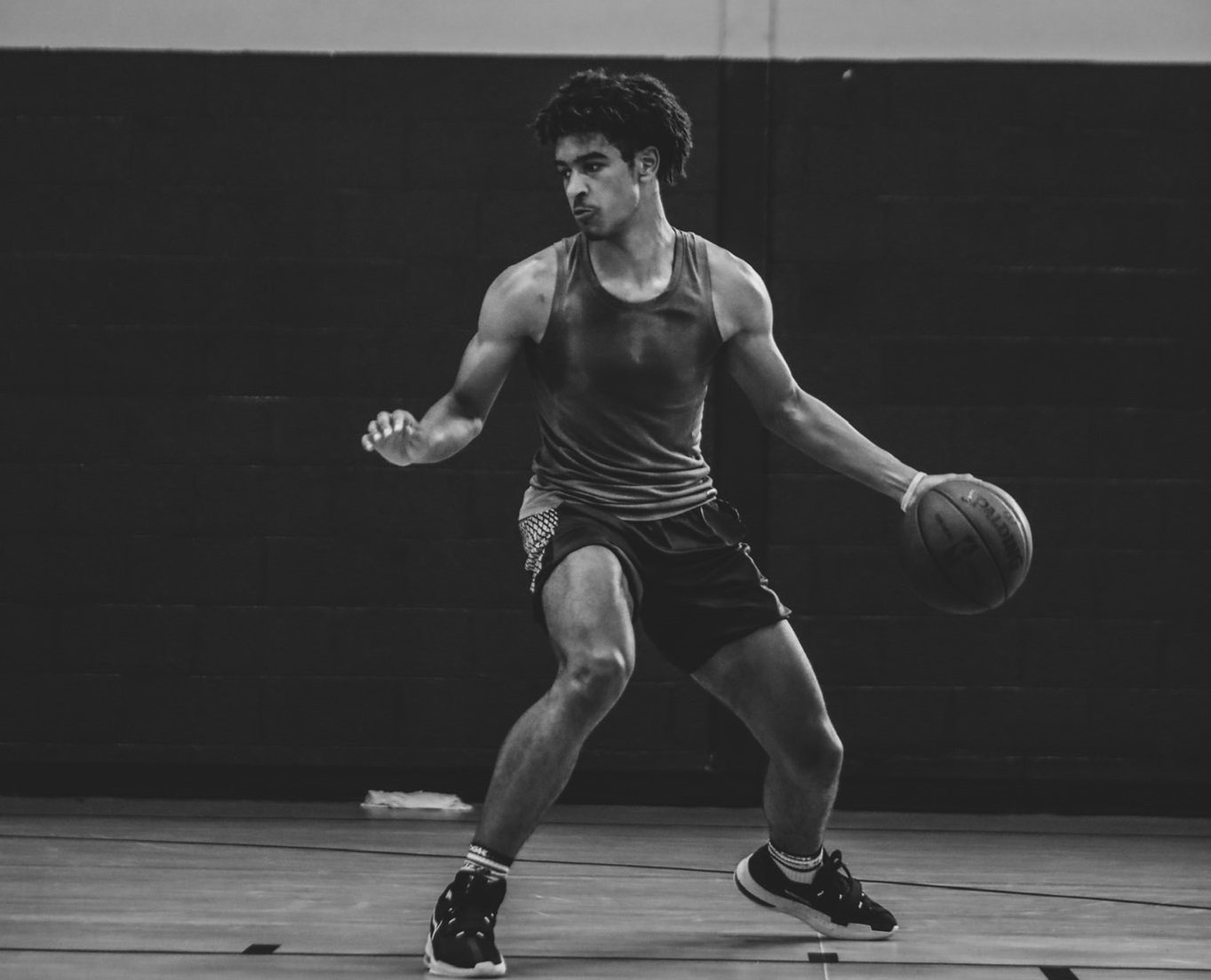
3) Hoops - what is the realistic finish to the ‘22 recruiting class? Do we have a legit shot at Clowney? Rice seems to be trending the right way. – Bmackattack
CC: There are two names right now to keep an eye on – Rodney Rice and Noah Clowney.Rice is a wing from DeMatha who was coached by new VT assistant Mike Jones. He has taken multiple visits to Virginia Tech, including an official visit to Blacksburg for the UNC football game on September 3.
Rice is rated as the No. 74 prospect in the country by 247, and No. 52 by the 247 Composite. He’s got a big offer list, and crystal balls on 247 have been rolling in for Virginia Tech recently. Louisville is his other finalist, and he’s taken three visits there, but unless something changes at the last minute this appears to be a battle that the Hokies are going to win.
Noah Clowney is a power forward from South Carolina. He is the No. 101 player by 247, and the No. 62 player by the 247 Composite. Tech is in a solid position for Clowney, though he doesn’t appear to be quite as far along in his recruitment as Rice. He visited Tech on September 10, and he’s also visited Indiana. Alabama could also be a player in his recruitment.
There’s also a chance that Clowney could elect to postpone his signing until the spring to wait and see if anyone else gets involved. Kansas has been mentioned as a possibility. However, he’s had a relationship with Tech’s coaches longer than anyone else, with Mike Young and assistant coach Kevin Giltner beginning his recruitment as a very young player while they were at Wofford.
From the outside looking in, it appears that those two guys are Virginia Tech’s top targets right now, and it sounds like we could get some good news on Rice sooner rather than later.
