

Welcome to Part 3 of “The State of the TechSideline Union, 2018” which is titled … “Trends.”
That’s not a particularly brilliant title, and some of the stuff I’m about to discuss will not be ground-breaking stuff, especially to those of you who are better at seeing the big picture than I.
At its core, this is a collection of observations that are shaping our thinking, and which are starting to tell us the direction in which we need to go.
Subscription Models All Over the Place
When I started “Will’s Personal Hokie Sports Web Page” (boy is that a mouthful) in March of 1996, everything on the Internet was free, and it was a God-given right that everything on the Internet should remain free, forever.
“Free” drove the Internet for the first half-decade-plus of its existence. The idea was to build the audience, get the eyeballs, and figure out how to make money later.
When the Internet 1.0 bubble (the original “dot-com” craze) popped in early 2000, most web properties whose models were built on “free” went away. Their venture capital dried up, and since they weren’t generating real revenue to support their operations, they closed shop.
One such property was the original Rivals.com (started in 1998), which in its infancy was free. After it went briefly out of business in early 2001, it was later resurrected as a pay network. You could subscribe to your favorite site for $10 a month or $100 a year, which seemed like a lot at the time.
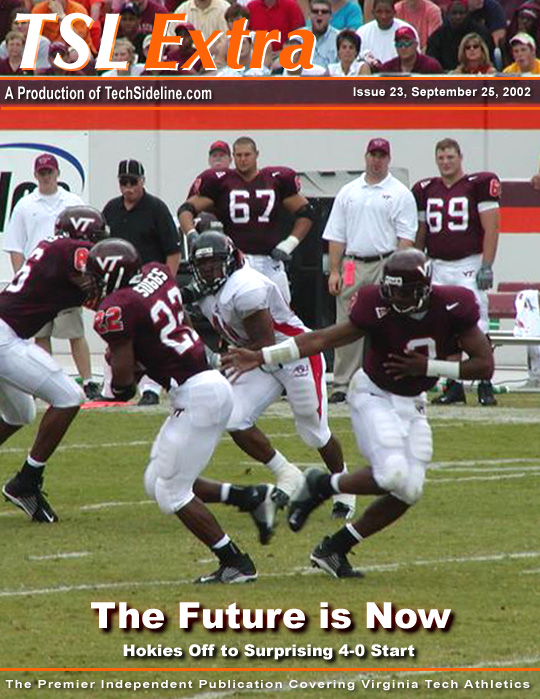
That was the first pay model on the Internet that I ever saw, and it paved the way for TSL to charge for content as well. At first, as I mentioned in a previous installment, we did the monthly e-zine TSL Extra, but in late 2002, we went to a Rivals-like model of daily (or near-daily) pay content. When we went from all-free to partially pay, there wasn’t much fuss from TSL readers, because Rivals.com had set the stage in our industry (college sports coverage, esp. recruiting).
Fast-forward 15-plus years, and we’ve all got numerous web subscriptions. I subscribe to Netflix ($10.99 a month), 247Sports.com ($9.95 a month), MileSplit.com (high school track/cross country news and stats, $7.99 a month), Adobe (for software -- $19.95 a month), and on and on. Some of you have a music service, like Spotify ($9.99 a month).
The idea of paying for content, and paying a monthly-based subscription for other services (like cell phone insurance and satellite radio) is now old hat.
This isn’t really a “trend,” it’s a fact. I bring it up because, when I ask someone why they don’t subscribe to TSL and they answer, “I don’t pay for anything on the Internet,” then I move on. They pay for things; they just don’t feel like paying for TSL. That’s fine.
But if TSL’s subscription numbers are stagnant, as they have been for about five years now, I don’t blame it on people’s desire to not pay for anything on the Internet. Lots of people are paying for lots of things. And in nearly every case, they’re paying more than TSL’s $5.99 per month price.
Paying More for the Premium Experience
There’s a relatively new movement in some industries of catering to the customer who is willing to pay more for a premium experience. In some industries, like the automobile industry, that concept is decades old. Sell the Cadillac to the guy who can afford it and wants it, and leave the Chevy for the Chevy guy to buy.
In other industries, it’s just starting to catch on. The movie industry worried that big flat screen televisions, combined with movie channels and streaming services, would be the death of the motion picture industry.
It’s true that the ever-improving HD home theater experience has siphoned off some attendance at movie theaters. Some people don’t mind waiting for that first-run movie to come to HBO or Showtime or Netflix.
The movie industry learned to let those people go, and to instead cater to the customer who wants the big screen experience and doesn’t mind paying for it. We’re talking about the guy who wants to sit in the new cushy chairs that are showing up in movie theaters everywhere, stare at the Imax screen (sometimes through 3D glasses), and get blasted by a sound system the likes of which he’ll never see in his house.
That guy will pay $15 or more for the full new-release Star Wars or Avengers experience, even though he could wait a few months and buy a DVD for the same price and play it over and over again.
That guy is me. Sure, I also go to the $6 Tuesday movie night, but when the new Avengers movie came out recently, I paid $30 for two Imax 3D tickets for me and my 17 year old, and we split a $20 combo of large popcorn, large drink, and large candy. I blew $50 for about 2.5 hours of entertainment, because I wanted that experience and wanted to share it with him.
Another story, one more relevant and recent: The University of North Carolina football program is ripping out most of the glaring aluminum bleachers – in every location but the student section – from Kenan Stadium and replacing them with chairback seats with armrests. That move will cost $6.5 million and will reduce capacity from 63,000 to 51,000. That's a "whoa" figure. That's 12,000 seats, not a few hundred.
Carolina will add a $6 “facility improvements fee” to each game ticket to help pay for that refurbishment and for future enhancements to Kenan. (Six home games times approx. 40,000 tickets times $6 = $1.44 million extra per year.)


In the last six seasons, North Carolina has averaged the following attendance numbers, per ncaa.org:
- 2017: 50,071
- 2016: 50,250
- 2015: 49,643
- 2014: 54,667
- 2013: 51,500
- 2012: 50,286
UNC has averaged 51,069 fans per game over the last six years, including a low of 49,643 during the 2015 season that saw them go 11-3 and play for the ACC Championship.
Let’s dissect this decision: North Carolina has quit pretending that those extra 10k-13k fans are going to suddenly decide to show up. They have decided to cater to the 51,000 fans that are still coming and are still committed to the program, and ironically, the changes they’re making to their stadium will reduce capacity to exactly that number.
Like the movie theaters, the UNC Tar Heels have decided to “let go” of that part of their audience that quit coming years ago, and to cater to those that are still attending, and to make their experience better.
Catering to the TSL Faithful
It all leaves me thinking about our business, and it tells me to “let go” of those eight hundred subscribers we lost from our peak in 2009. They’re not coming back. No amount of winning by the football program or $20 off enticements is going to rebuild that subscriber base to what it once was. The world of entertainment is too fractured for that.
As I told you in an earlier installment, TSL has a hardcore base of subscribers that renews at a very high rate and which has stayed basically unchanged in numbers since about 2013 – five years, very similar to the Carolina football situation.
Oh, we lose a few and add a few, but the rate at which people are coming in one end of the pipeline is about the same as the rate at which they’re going out the other end.
I see other businesses catering to their core customers, instead of chasing rainbows, and I find myself thinking it’s time for us to do the same.
But what does that mean? I have some ideas, but other ideas are still forming, based on the conversation these articles are generating. We have some concepts that we’re already in the process of carrying out, but other concepts are just now being brainstormed.
Something had been circulating at the edge of my brain, and in the comments section for Part 2: The Challenges We Face, TSL’er “pienkows” did a pretty good job verbalizing it. Step to the head of the class, pienkows:
I also wonder if your concept of the business reflects what the site has become, at least for many who use it. Based on your writing, I infer that you and Chris think of yourselves as sports journalists and of TSL as essentially an online news outlet (total speculation here – sorry if I’m off base). I wonder how your strategic direction might change if instead you thought of it as an online community brought together by their love of all things Hokie. In the one, content is the sole function of the site and success is measured by the quality of the content and the user acceptance of it, while in the other, high quality journalistic content is but one tool used to create and cultivate community and success is measured by the quality and quantity of user interaction and engagement.
I replied with one word: “Bingo.”
In other words, to better survive in the current landscape of our industry and the entertainment world at large, what should TSL do to pivot from being merely a subscription web site … to being more of a community? … To being more of a place that people value being a part of?
It’s easy to say, but not so easy to do. We have some interesting concepts we’re going to launch to strengthen and build that sense of community, but we face two challenges that I can foresee:
1.) The community-building isn’t all up to us. It’s also up to you.
We can do all sorts of things to “build community,” but ultimately, it’s out of our hands if the community we’re building decides to tear itself apart on our message boards, which we can only monitor to a point, but not completely. Just this week, for instance, I have seen some in-fighting over Devyn Ford’s apparent decision to spurn Virginia Tech for Penn State, which may be official by the time you read this.
2.) I/we have always been content-focused. Being community-focused won’t come easy.
If we don’t sell subscriptions, we don’t survive, and we sell subscriptions and keep subscribers happy by having good content. I have spent the better part of 20+ years erring on the side of content, and content is what people judge us by the most. I have some ideas on how to build community, but I’m not as good at it, and I’m not sure what it even means sometimes.
Plus, to be honest, I’m more of an introvert. Not hugely so, but I’m not an outgoing guy, and I’m not good at connecting faces and names and networking.
But pienkows isn’t saying that we need to lessen the emphasis on content. It just needs to be a tool in the toolbox we use to build community.
Here's a random example of how we can build community through content: I interviewed Virginia Tech wrestling coach Tony Robie this past Monday, and since I know very little about wrestling, I asked the diehards on the Wrestling board for questions. I then had Tony answer their questions. When I finally get around to transcribing the interview, they’re going to love seeing their questions answered by the head man. That’s building community through content.

Another example: “Where are they now?” stories have been a big request as we have talked about TSL and its future. Those are great community-builders, because reminiscing about times past brings the community closer together.
So it can be done, and I think it’s what we have to do to (a) survive, and (b) be stronger.
In the final part of this series, I’ll tell you how we’re going to apply all these thoughts I’ve given over the first three articles into a strategy that I think will improve your TSL experience (content-specific and otherwise), build a stronger sense of community for both you and TSL, and ensure that TechSideline.com will be around for a long, long time, and that you’ll enjoy it for a long, long time.
I can’t tell you everything, because some of the things we’re doing are still under development and must be revealed in their own time. But things will start falling into place soon and will continue throughout the summer and into the fall, until the complete picture is formed.
As always, thanks for subscribing, and we’ll see you next week with the final part of this series.