


If you came here to read about the ODU game, today's Monday Thoughts is going to be a letdown for you. I don't think I've ever been less interested in a game. Okay, the 13-10 squeaker over Rutgers in the 2012 Russell Athletic Bowl pegs the needle here, I admit. But a year from now, when you ask me about this ODU game, I doubt I'll even remember the score, much less anything that happened in it.
From the moment the final cannon blast from Skipper put a bow on this one, I was thinking about Clemson. The Hokies have done a good job with the first four games of the season, and everything from an 8 p.m. start time to an ESPN Gameday appearance has fallen into place, and the stage is set for arguably the biggest game in Lane Stadium since 2005. We've been building up to this since Will Grier's last pass fell to the turf in FedExField a few weeks ago. Now it's here.
It's easy to get super-excited about this upcoming Clemson game, and to get so worked up that you wind up tearing up your dinner roll like Joe Joe the Idiot Circus Boy, until you've made a mess of things. But I'm about to write several thousand words about this Clemson game that will keep you from going all Chris Farley on us.
Granted, I'm not telling you not to go bananas on Saturday night. (That double-negative means you should go bananas, if you're so inclined.) But what I will counsel you to do, regardless of the result Saturday night, is put this game in its proper context.
Looking for the Ceiling
As fans, when we evaluate a football program and by extension its coaching staff, I think we're asking ourselves one question — What is the ceiling of this program under this staff, and are we progressing towards it?
In Frank Beamer's tenure, the program found its ceiling, and it was a high ceiling. It was nearly a national championship. Had things gone a little differently here and there, it would have been. I could write a whole separate article about that, about how close the Hokies came not just in 1999, but in 1998, and 1995 and 1996, and even 2007. I could go on for a while.
That was a different college football world. Back then, the state of Virginia was Beamer's recruiting playground. Led by Jim Cavanaugh and a handful of other good recruiters and evaluators, Beamer and his staff mined the state for the best talent and potential, at a time when in-state talent was deep and peaking. That was before Florida State, Alabama and others became major interlopers in recruiting the state of Virginia.
It was back when seasons were just eleven games long, with no twelfth game or conference championship game to bring an extra chance for a loss. It was back when computers ruled the championship selection process, not biased people. It was back before conference networks started dumping huge amounts of money into the coffers of major programs — but not Virginia Tech, thanks to John Swofford's fumbling mismanagement of that major part of the ACC's business — enabling them to separate themselves through sheer money. It was before Nick Saban introduced the concept of huge numbers of football analysts and recruiting support staff to streamline operations and enable the programs with big resources to separate themselves from the have-nots in areas other than just facilities.
Now the landscape is very different, in those ways and others. But the question is the same: What is the ceiling of this program, and are we progressing toward it?
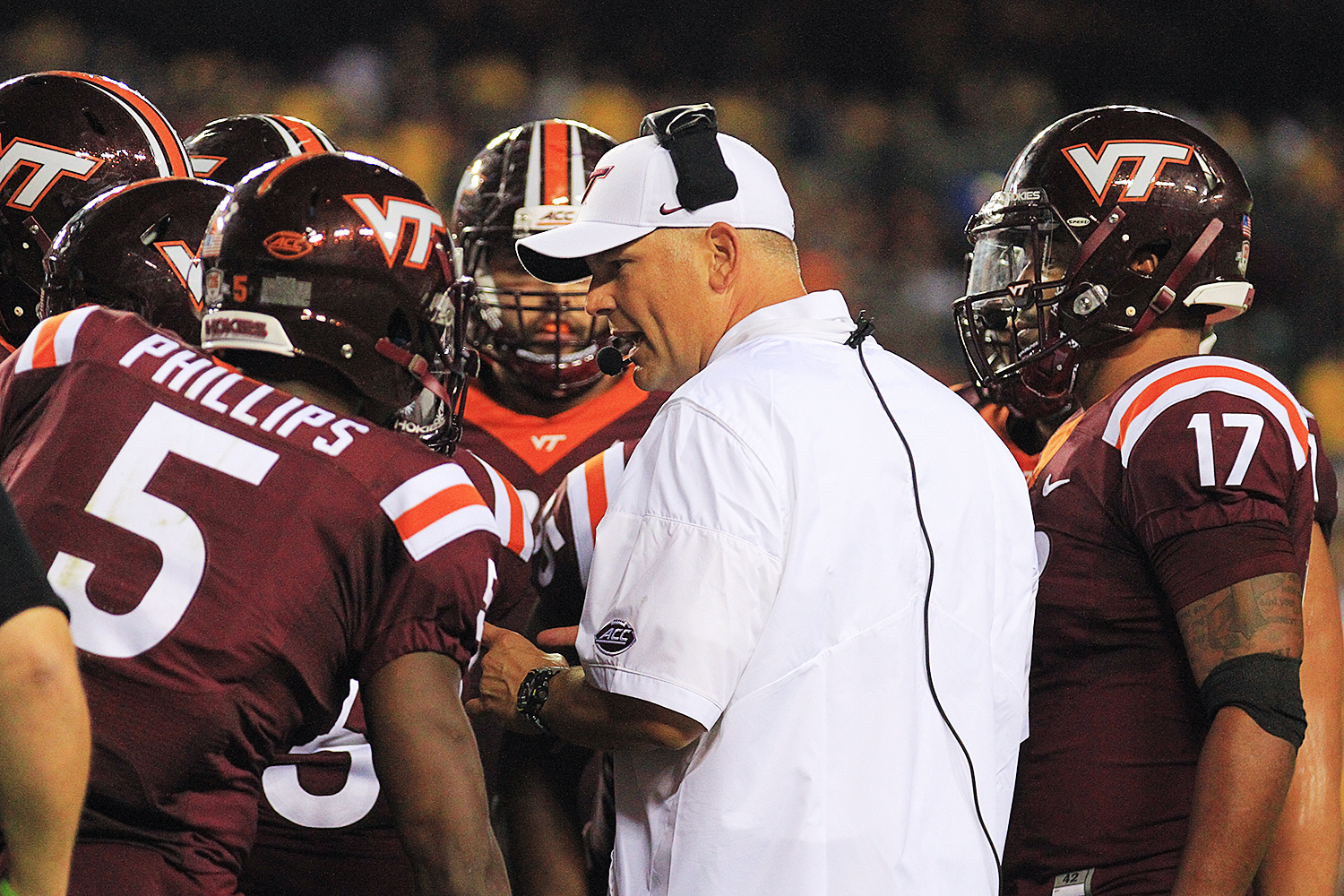
When the second part of that question goes negative, that's when coaches get fired. East Carolina, for example, doesn't have a high ceiling as a program, but their ceiling isn't "one of the worst programs in the country," which is what they are now. Scottie Montgomery will likely get fired at the end of the season, because instead of progressing towards ECU's ceiling, they're fumbling around in their basement, looking for a light switch, about to trip over a box in the dark and break an ankle.
At this point, you're probably waiting for me to tell you where I think Virginia Tech's ceiling is. I'm not going to reflexively answer, "A NATIONAL CHAMPIONSHIP! GO HOKIES!!!" because that's silly. Virginia Tech is far away from competing for a national championship. Their path through the ACC Coastal Division and the ACC Championship Game is one of the easiest in college football to the Playoff, but that doesn't mean they're anywhere close to navigating it yet.
A Great Coaching Staff and Recruiting is Key
I'll say this up front: Virginia Tech's coaching staff is capable of winning a national championship. The game planning, preparation, play calling and adjustments in all three phases of the game — offense, defense, and special teams — is top-notch. The best in the country? Maybe, maybe not. Capable of winning a national championship? Yes.
It takes more than coaching, though. Once you've got the coaches, it takes recruiting. Once you've got recruiting, it takes all that stuff you can't control — luck, injuries, rankings, etc. All you can do as a program is recruit and coach, and the rest is up to fate.
To go on a bit of a tangent, often it's just timing. I think Virginia Tech's 1999 team would have won the 1998 national championship or the 2000 national championship, but sadly, they didn't get to play for it those years. They were fated instead to run into the 1999 Florida State Seminoles, one of the better teams in college football history. (It's true, I saw an article once years ago that said so.)
Back to the topic — can Virginia Tech recruit well enough to win a national championship? The answer from the mid-late 1990s to the mid-2000s was yes. Virginia Tech was talented enough to win a championship several times from 1995-96 through 2005 or even 2007.
But now? I don't know. We're in the process of finding out. We've written many articles about how the recruiting landscape has changed, so I won't rehash that here, but it's a tougher row to hoe. It's never been easy, but it's even harder now.

Virginia Tech's coaching staff is good, but when it comes to recruiting, they're solid but not the rah-rah kiss asses (pardon the expression) that some coaching staffs are. You'll never see Justin Fuente hollering "Bring your own guts!" or getting weepy about his players or his program, though he may one day prove me wrong on that. The Tech coaches (and for that matter fans) are not the cutthroat dirty recruiters that some other programs are. And Virginia Tech doesn't, and probably won't ever, have a $55-million football center with a giant sliding board, mini-golf course, or nap room in it.
The Tech coaches will have to find their own way, and get better at recruiting their kind of guy, rather than ever being able to pick and choose from a long list of 4-star and 5-star guys. That's what Frank Beamer did, and although the details have changed, it's what the current staff will have to do. The key is to get the right big-time players in the right places, and develop those high-level 3-stars around them.
One thing that will boost Virginia Tech's recruiting is to become a sexier, higher-profile program.
Now we're getting to the meat of this article.
The Journey Back
Virginia Tech is trying to get back to where they used to be. They used to be considered one of the top programs in the country, a fun team to watch, and a national championship dark horse, or even front runner, year in and year out.
I'm not making that up. Virginia Tech was a top-five team at one point in every season from 1999-2005, except for 2004, when they peaked at No. 9 in the rankings. They cracked the top-10 every season from 1999-2011, except for 2006 and 2008. This was a big-time program.
But they haven't been ranked in the top-10 since 2011, and their current ranking of No. 12 is their highest ranking since they entered the 2011 ACC Championship Game ranked No. 5. The Hokies haven't won a conference championship since 2010, after winning seven of them from 1995-2010. Their current non-championship drought of six seasons and counting is their longest since they started winning championships in the Big East in 1995.
Getting back is a journey.
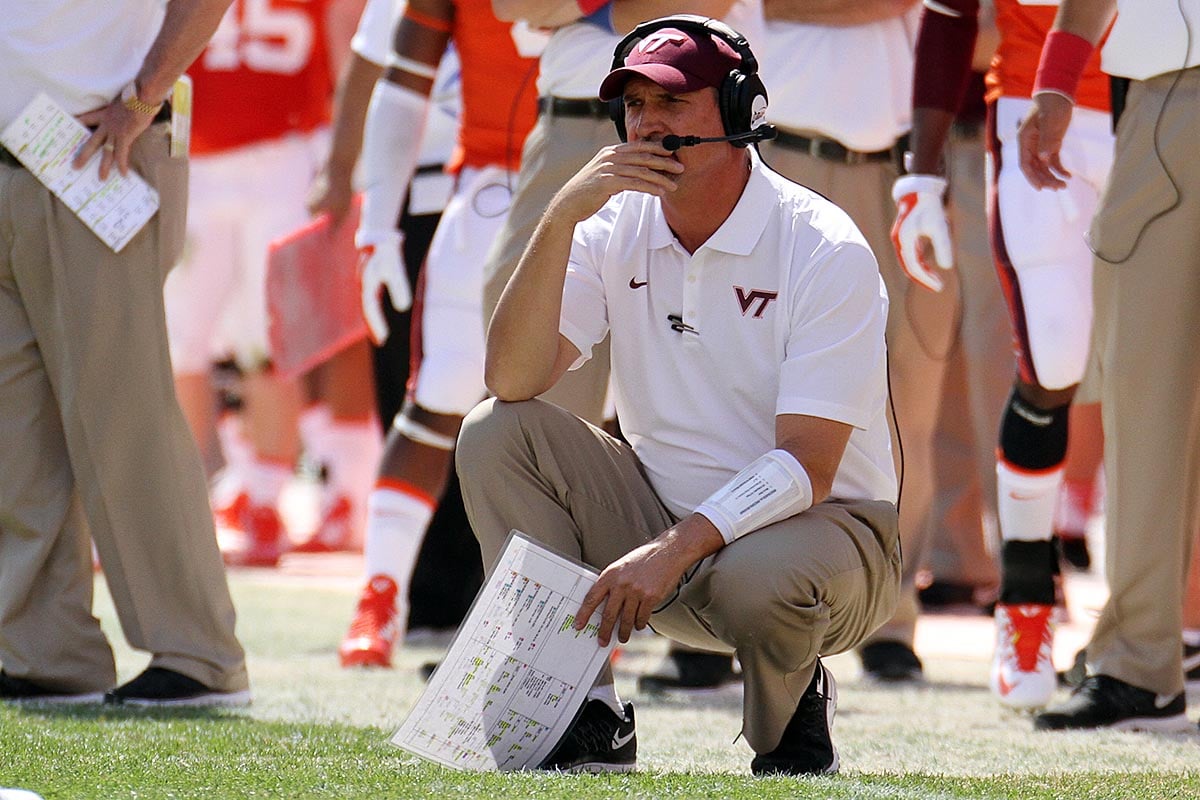
It doesn't happen in one night. It doesn't happen with one recruiting class. It doesn't happen just by doing anything once, really. It's a process.
What can be hard for fans to deal with is that the journey isn't a straight line. It's made up of many instances of two steps forward, followed by one step back. That keeps you moving forward in general, but it gets rocky along the way. When you back up and look at the whole picture, the progress is good, but those steps backwards are hard to take.
That's how Beamer built his program. Humor me while I classify the steps in all 29 years of Frank's tenure in bullet-point form.
- 1987-1988: backward (compared to the Dooley years)
- 1989-1991: forward
- 1992: backward
- 1993: forward
- 1994: backward
- 1995-1996: forward
- 1997: backward
- 1998: forward
- 1999-2000: one HUGE step forward
- 2001-2003: backward (mainly because of late season swoons)
- 2004: forward
- 2005: backward
- 2006-2011: treading water (championships, but some ugly football)
- 2012-2015: crash, but at least it was a soft landing
There were some tough seasons in there, where we wondered if the program was going to recover, or if we were seeing the end of prosperity. Beamer had a gift for getting things back on course, and that's a huge reason why he lasted so long.
Virginia Tech's ceiling under Justin Fuente is higher than where the program is now, maybe a lot higher. This is really good news — the Hokies played for a conference championship last season and are ranked No. 12 in the nation right now, but they're just getting started.
I'll be shocked if we're sitting here four years from now, saying to ourselves, "Wow, I had no idea that a No. 12 ranking would be the high-water mark of Fuente's career at Tech, and that the 2016 ACCCG is the last one we'd play in." I think instead that we're on the first few bullet points of his career at Virginia Tech, and so far, I'm labeling 2016 "forward (compared to the end of the Beamer years)."
So what does this all have to do with Clemson?
A Clemson History Lesson
Clemson comparisons work around here. I think Hokie fans recall when Tech used to whip the Tigers back in the late 90s through the 2000s, and now the Tigers are national champions.

So Tech fans ask, "Why not us?" and "How did they do it?"
The answer to that second question is a long article, one that I probably can't write. But I can show you their records since Dabo Swinney became their full-time head coach before the 2009 season:
- 2009: 9-5, Music City Bowl Champions
- 2010: 6-7, lost Meineke Car Care Bowl
- 2011: 10-4, ACC Champions, Lost Orange Bowl
- 2012: 11-2, Chick-fil-A Bowl Champions
- 2013: 11-2, Orange Bowl Champions
- 2014: 10-3, Russell Athletic Bowl Champions
- 2015: 14-1, ACC Champions, National Runner-up
- 2016: 14-1, ACC Champions, National Champions
That's an interesting progression. In his article from yesterday, Chris Coleman talked about how Clemson went 11-2 in 2012, then started out the 2013 season 6-0. They played a huge Saturday night home game against Florida State … and got crushed, 51-14.
What Chris didn't mention is that Clemson was the No. 3 team in the country, and Florida State was No. 5. What Clemson fans anticipated to be a coronation of their team turned out to be a deflating defeat. At home, no less.

But go further back than that. In 2011, Clemson won the ACC Championship easily over Virginia Tech, 38-10. It was their first ACC Championship in twenty years, and they probably had a feeling that they had arrived. But in the ensuing Orange Bowl against West Virginia, the 'Eers destroyed Clemson 70-33. I rarely use the word "embarrassing" to describe a result, but for Clemson, it was embarrassing. Their defense just rolled over for WVU.
For the Tigers, the road to a 2016 national championship was an eight-season odyssey that saw two steps forward, one step back, over and over. But the general progression was in the right direction, though it may not have felt like it at several points along the way.
Remember that, as you look back on the Hokies' baffling whippings at the hands of Syracuse and Georgia Tech last season. Not every game along the path moves you in the forward direction.
What This Means for Saturday's Clemson Game
Earlier in this article, I said that one big key to boosting Virginia Tech's recruiting is to become a sexier, higher-profile program.
That process is already under way. The first step is to stabilize the program and restore it to respectability. Justin Fuente has already done that, going 14-4 since his arrival and returning the Hokies to the national rankings. When the game opens Saturday night, the Hokies will be playing as a ranked team for the 12th time in the last 15 games. When your team is ranked, that means their name scrolls across ESPN's bottom line ticker all day long.
Last year, Tech won the ACC Coastal, gave Clemson all they could handle in the ACC Championship Game and won a bowl game. Then Tech followed that up with a made-for-TV, neutral-site win over West Virginia, and the Hokies are now ranked No. 12 in the nation, their highest ranking since 2011 (as I noted above).
The next step in the process is to play more games that are important, high-profile games. Your players have to get used to the big stage and playing in games that matter. Last year's Battle at Bristol was the first such game for Justin Fuente at Virginia Tech, and yes, Tech failed in a shower of fumbles.
But every one of these games teaches you something. I'll never forget Fuente's quote from Tech Talk Live! the following Monday:
We were up 14-0 and I was really worried, because we were out of our mind. In my opinion, we should play with great emotion, but we should also be in control and expect success. We shouldn’t be surprised by success. We should expect success. We also shouldn’t be surprised when the other team makes a play. We’re playing another really talented team, they’re going to make plays. We can still play with great emotion. I thought our peak was way too high and I was a little worried about that and sure enough, we had a big mistake and all of a sudden it cratered out.
"We shouldn’t be surprised by success. We should expect success." That's one of my favorite quotes by Justin Fuente so far.
The loss was hard to take, but in the process, Fuente learned something very valuable about the mindset of his team. A piece of the puzzle fell into place for him.
In 2011, in the wake of Clemson losing 70-33 to WVU, Dabo Swinney learned he had to fire his defensive coordinator, Kevin Steele. He had suspected it — the Tigers were terrible defensively against every team but Virginia Tech that season — but the bowl game sealed the deal. Swinney fired Steele immediately, and Clemson started getting better. Sometimes, even crushing defeats can move the program forward.

Virginia Tech's next big 2016 game after the Battle at Bristol came in the ACC Championship Game, against the vaunted (and eventual national champion) Clemson Tigers. Tech played, lost and learned.
Next came the season opener against West Virginia at FedExField, a battle between two ranked teams in a packed stadium, on ABC in prime time. This time, the Hokies won.
And of course, here comes Clemson and ESPN College Gameday, rolling into Blacksburg this weekend for a primetime ABC game. It's arguably the biggest game in Lane Stadium since the 2005 Miami game, from an exposure standpoint.
Every one of these games the Hokies play will make them better and stronger, win or lose. A defeat Saturday, even one by a large margin, won't mean that the Hokies have failed, that it's over, or that Fuente won't get another chance to elevate the Hokies to greatness again. Even a win over the Tigers wouldn't mean the Hokies are great again. Tech could win Saturday, then lose one or two ACC games later, and not even play in the ACC Championship Game this year.
We don't know what will happen on the field, but we do know that Saturday is going to be an important step on the path. We also know that the stands will be packed, the crowd will be loud, and the Enter Sandman entrance will once again be featured prominently as part of the game broadcast. All of this, and the maroon uniforms the Hokies will wear (I'm betting it will be all maroon, not just a maroon jersey), will all combine to make Virginia Tech look cool as hell Saturday night.
If the Hokies get up early in the game, Justin Fuente will dial in what he learned from the Battle at Bristol last year to keep them under control. If the Hokies fall behind, he'll remind them of the ACC Championship Game last year and will pull a string or a lever to get things going again and keep the crowd in it. Regarding the crowd, as the noise builds, this team's experience against WVU already has them ready to play in a loud game.
One thing this team hasn't done under Fuente is play in a huge Saturday night home game. As he rebuilds the program, there will hopefully be more such games, and whatever he learns in this game, he'll be able to apply in the future.
Speaking of the future, there will be (per program insiders on 247Sports) four recruits at the game who are currently ranked in the national top-10 for 2020. Yes, we're talking about current high school sophomores here. These are kids who likely don't have the foggiest notion what Virginia Tech football was like in the late 90s through early 2010s. Whatever happens Saturday night will imprint on them their first big impressions about Virginia Tech football, and there is no doubt that the magnitude of the moment, right down to the Enter Sandman entrance, will impress them.
The more opportunities the Hokies have like this game, and the more they can take center stage, the more it will help recruiting, and this thing will start to build, and we'll continue that journey towards figuring out where the ceiling is.
Win or lose, Saturday night is a big step for the Virginia Tech program. It's good to be relevant again.
We'll return with our game preview later this week. See you then!