

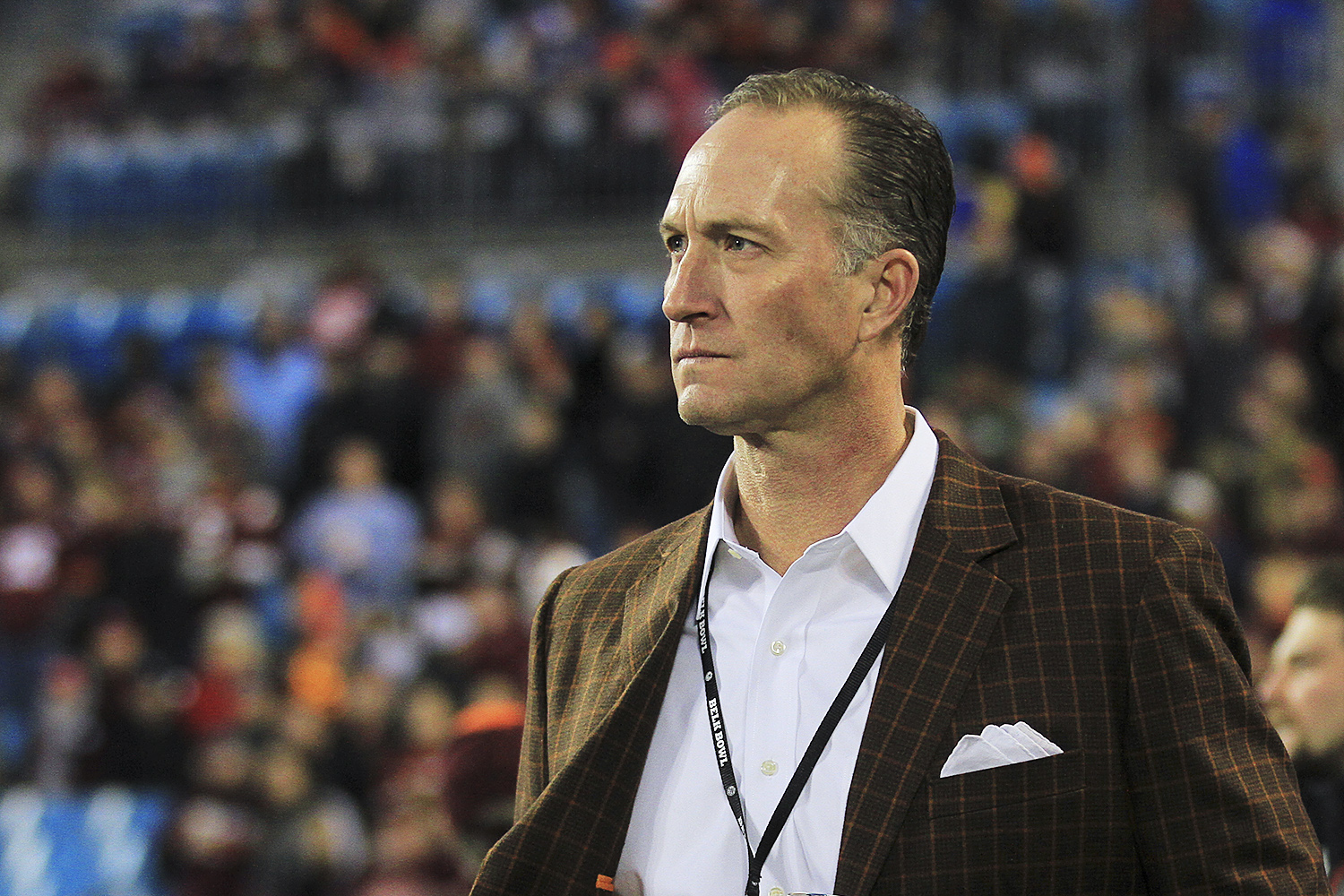
Recently, Virginia Tech Director of Athletics Whit Babcock sat down for a one-on-one interview with TechSideline.com. Babcock discussed a wide range of topics, from the recently canceled football series with Michigan and football scheduling in general, English Field at Union Park construction, future plans for Lane Stadium and Cassell Coliseum and men's basketball head coach Buzz Williams.
This is part one of that interview. You can access both parts here. We’ll add notes of clarification in italics throughout the interview.
Recently, Michigan canceled a home and home football series with Virginia Tech that was scheduled for 2020 and 2021. The same day that cancellation was announced, The Seattle Times wrote that Michigan “confirmed” a series with Washington for those same two years.
TechSideline.com: There was an article recently in the Seattle newspaper that said Michigan has firmed up a series with Washington in 2020 and 2021. Connecting the dots, Virginia Tech’s series with Michigan was scheduled in 2013, they [Michigan] scheduled a series with Washington in 2014 for the same years, and then Jim Harbaugh started coaching Michigan in 2015. The article mentioned that Michigan was trying to get out of the series with Washington, and Washington didn’t want to get out of it. That tells me they were either trying to get out of both of them, or one of them. So just tell me the story of what happened on your end.
Whit Babcock: We had been hearing through the grapevine, ESPN and some other people that help us put some schedules together, that Michigan may eventually move that game. So we kind of thought it might happen, but we thought we could wait, and obviously Michigan would be a great opponent here. And then quite frankly, we knew we were a little bit overscheduled.
When [Michigan AD] Ward Manuel called — he and I are friends, he worked at Connecticut when I was at Cincinnati, he’s a good guy — he called me and said, "Hey we need to get out of it, but I also know you’re overscheduled. We talked about out years, but our first opening is, what 2029 or 2030?"
TSL: It’s way out.
WB: Then we couldn’t really agree on dates, and there was a … anyway, we just set it on that amount [$375,000] as a way for them to get out of it. We knew our fans wanted to play it. I was not going to be the one who canceled it. I’d like to stay employed, you know? So when somebody calls and says we’re not going to play, then that’s what you do.
ESPN had asked us a few times, "Would you be willing to move or change Michigan," and we were not going to do that.
TSL: Is anything presenting itself at this time as replacements?
WB: Not much. Jim Weaver and John Ballein were very good at scheduling, so we’re booked for a long time. Since I’ve been here, we’ve added Maryland, Rutgers, BYU and a couple FCS games that people get fired up about.
TSL: What I meant by the question is, you now have two open dates, what are you thinking there?
WB: John Ballein and I have been talking about it. For your readers and people I hear from, it’s not East Carolina (smiles). I’m not trying to hold out on you. There are so few that are open, and the conversations we’re having, then it usually gets down to the coach level, and do they want to play each other. Justin’s pretty darn good [about being willing to play against other teams], but there’s not as many people who have an interest in playing us. I know we want to get the best game we can get.
We’ve been somewhere preparing for this possibility for a while, but not near like Michigan had.
TSL: I think in the past you had mentioned a possible neutral site game in Charlotte with South Carolina.
WB: I know we have talked about a neutral-site game, but we don’t have anything signed with South Carolina nor any ongoing conversations. But that would be a great game to have down there.
We always want to have at least six home games, and we want to have a really strong home schedule. I’ve always believed that we have to start at Lane Stadium, and if we ever have a year where we have seven home games, that we could peel off one, but we’re not in any conversations about that right now.
TSL: At this point, nothing specific.
WB: Zero.
In the July of 2017, Virginia Tech announced that they will play multiple football games against in-state opponents Liberty and Old Dominion. The announcement included six games against ODU (three at home and three on the road) and five games against Liberty (three at home and two on the road, plus a game previously scheduled for 2020 in Lane Stadium).
The deals have been criticized by some Virginia Tech fans for including road trips to ODU and Liberty, but it’s notable that many other schools have also scheduled games at ODU and Liberty as part of longer deals, including UNC, Wake Forest, Syracuse and Virginia.
TechSideline.com: The Liberty and Old Dominion deals, I’m sure you’ve heard from some fans about those. There are some fans who are quite vocal about not liking those deals, primarily because it involves Virginia Tech traveling to play at their places. I know what’s been said publicly, if you go to play at ODU, it helps with recruiting, it’s closer to Tech fans in that area, that kind of thing. The question is, how much do finances play a role in a deal like that?
Whit Babcock: A big role. But I wouldn’t put it at the top of the list. But it sure is nice, when you have a home-and-home series that your fans can get to, that you can go by bus, that’s not so bad when you can get that.
To go to the 757 and play and take it to our fans there, I wouldn’t say that was as much driven by finances. Liberty was, a little bit, in full transparency. In trying to transition out of FCS games, there’s not that many openings. When you get a team like Liberty, they’re very popular. Carolina just scheduled them. Syracuse and Wake Forest and UVA, all of them signed a game with Liberty. (Each link describes a two-for-one series, two at home, and one on the road at ODU.)
Then we started thinking about, "If we don’t play that home-and-home against Liberty, who can we buy to come in here?" And it’s probably going to cost $800,000 to a million to bring them in. So we’ll go play on the road, and Liberty comes back the following year, and no one’s paying anyone.
TSL: And Liberty fans are going to buy their whole ticket allotment when they come to Lane Stadium, and not return tickets.
WB: And I believe that was Jim [Weaver]’s thought process on the initial deal with ECU, and I believe it was accurate. I’ve also signed some games with East Carolina, but we’ve seen the ECU fan numbers drop. But ODU packed it here last year.
But as you know, John [Ballein]’s really good at it and ESPN helps us some, but there’s not too many people that’ll play you home-and-home. We had a Conference USA team approach us about coming here to take Michigan’s place, and it would be a $1.5 million guarantee. So we said no thank you.
So that’s why the priority is the home-and-home and places you can travel, and getting out of FCS games. So when Liberty became 1A, that became a lot better option.
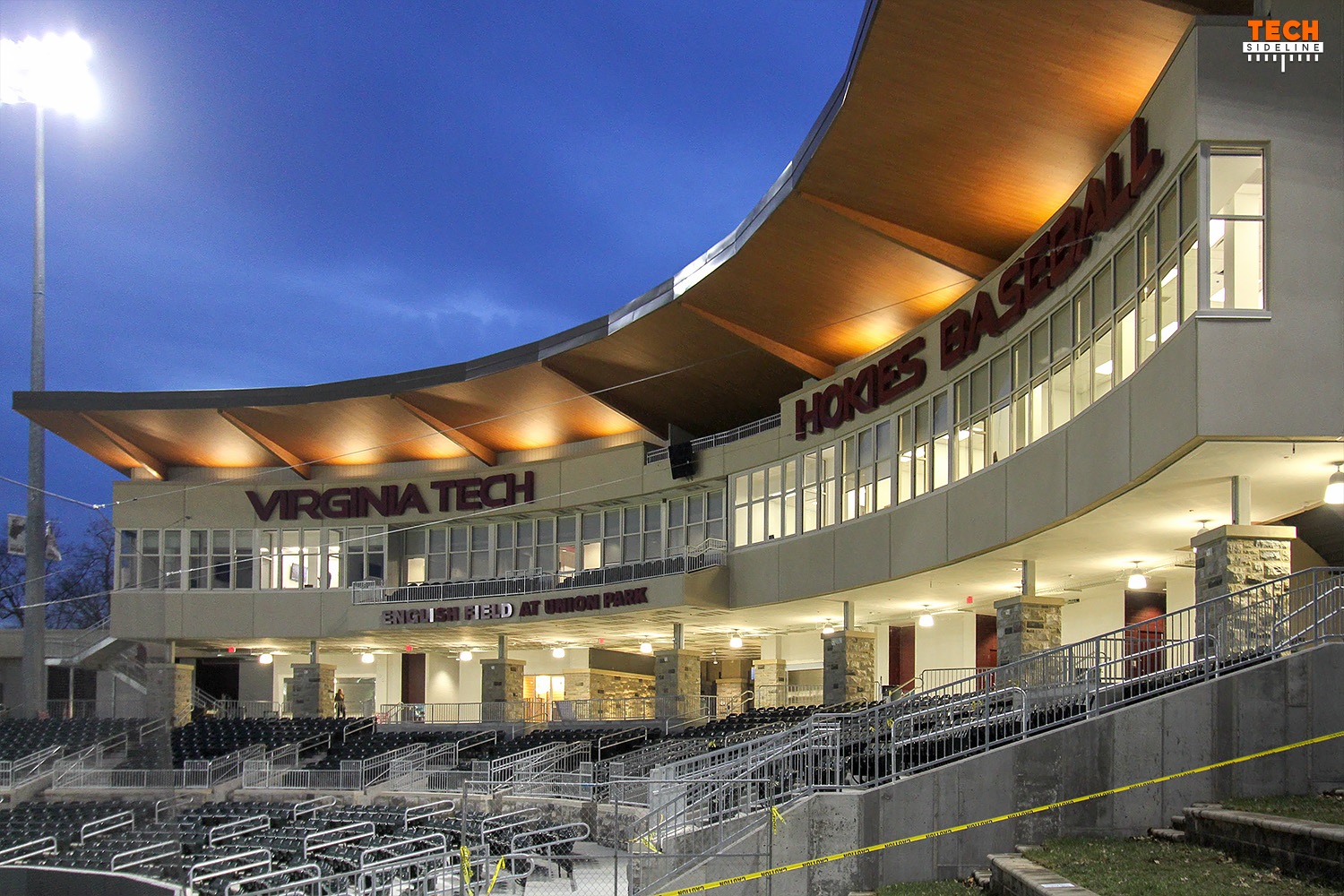
Virginia Tech is wrapping up construction on English Field at Union Park, a big renovation project that was part of a combined capital improvement effort that included big renovations to Rector Field House as well. The updated English Field at Union Park will be officially unveiled at a grand opening on Saturday, April 14, the night after the Spring football game. The Hokies will play Louisville that night at 7 PM.
TechSideline.com: What was the original schedule on the baseball stadium construction and has that schedule been met to your satisfaction? Will it be fully ready to go by the grand opening?
Whit Babcock: We’re pleased with it. We had every desire to get this stadium done by the start of the season, by the first home game. I don’t believe we have crossed the date — in other words, three snows slowed us down and we’re doing the best we can to get it done.
We have the scoreboard going up and we’d really like for the whole thing to be done, every bow to be tied, by the grand opening for the Spring Game. It’s a little behind. I had one of our baseball players ask, he had heard we were getting big money every day in the form of a late penalty, and I said "No, but if it’s that big, I’ll slow them down for a couple months."
We’re pleased with it, we love the look of it and I’m really confident that when people go to watch a game there, it’s a great experience. We’re playing Louisville right after the spring football game, and that’s the grand opening, and I’m sure it’ll be 75 and sunny.
(This interview was conducted on Friday, March 30th, less than one week after heavy snow caused power outages throughout the New River Valley. And yes, the forecast for Saturday, April 14 is mid-70s and partly cloudy.)
TSL: Do you know the timeline specifically on the scoreboard?
WB: We’re pushing hard to get it done by the grand opening.
TSL: How did sales of the $1,000 tables go?
WB: I bought one myself, for the record, full price. We sold every one of them and we look to add more next year. Those sold very quickly. And all of the suites are sold and we had some season ticket sales. We’re pretty pleased with it. That’s a neat space to watch a game and we feel like we can use that facility for a lot of things other than baseball, like socials, or Monogram Club stuff, maybe concerts. Things like that. It’s a cool place.
TSL: Do you think you underpriced the tables? I almost bought one.
WB: Probably. But baseball is not a revenue generator that way. We really were flying a little bit blind. The suites were $12,500 and the tables were $1,000. We were trying to do right and make it affordable. We didn’t want to turn people off by going too high.
TSL: We at TechSideline.com have heard that the $31 million or so that was borrowed for the English Field / Rector Field House project was a loan from the university. True or false?
WB: I believe it’s true. We did it all through the university. For me to be one hundred percent sure how they financed it, or what they did with it, I don’t know. But I believe it was done through the university, they would loan us the money as we needed it, instead of a lump sum. The interest rates are usually a little bit better, and then we had a dedicated revenue stream through Union Bank and some old debt falling off that it wasn’t that big a stretch for us to use gift money, financed money, and not sting our overall budget too terribly.
And we were also hustling to get those two projects done, finish up this football stuff, and then when we roll into this next capital campaign, do some work at Lane and Cassell.
The reason I give you that long answer, if we try to raise $18 or $20 million for track, that could have taken a while. Or, you might get $5 million in on one project, $5 million in on baseball and you can’t build either one of them. So we just felt like it was a good way to do it, to lump them together.
Jim [Weaver] was also so very good with budgets and almost all the debt that Jim incurred was on revenue generating projects. He was outstanding. So we were in a position to do it. So let’s say the money we borrowed, $2 million a year is the house payment, so to speak, and we have gift money from Union Bank and other debt falling off, it was a relatively high, six-figure new net hit for us.
TSL: What’s the current vision for Cassell Coliseum, either working on it or replacing it?
WB: First off, we’re very pleased with the new Student-Athlete Performance Center area up there, and essentially that renovates almost a quarter or a fifth of Cassell, just that end of it, because the new facility up there will tie into Cassell Coliseum.
But what we would like to do in the not-too-distant future is expand the [Cassell Coliseum] concourses out, add some more amenities, maybe some club seats. We’re considering suites or maybe even loge boxes like what the media sit in now.
Something to still make it this incredible home court advantage, but if we could generate some more revenue without stealing the fan experience, we’d like to do that, too.
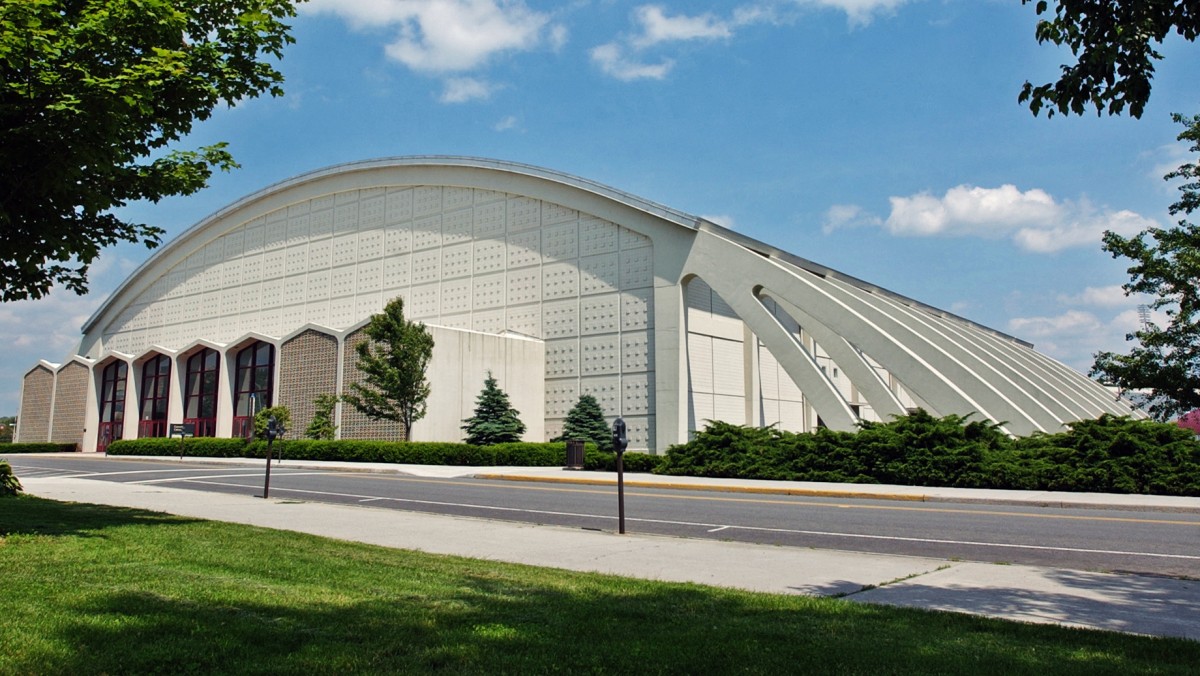
I just think the building has great bones and to go out to that next set of arches is a fairly easy construction option. But I think we’re only going to get better in basketball, men’s and women’s, and wrestling and volleyball. And when we’re packed up there, it’s not a real pleasant experience in the concourse.
But we have no plans to do a new arena at all. I would never say never, but we love the central location. Students can get to it. I like the history of it. It darn sure works for Cameron Indoor. It can work here. But that’s the next big one, but I don’t think that’s a 10-year horizon, I’m hoping that’s three to five years from now that we’re really making progress.
TSL: I don’t think I’ve ever envisioned the concept of the outer walls of the concourses being moved out until just now. So I get that.
WB: When you walk out there beside it, you can see how you could easily take the side walls and move them out. You know how the wind blows through there when the doors are open.
TSL: I know you’ve talked about wanting to eliminate that.
WB: The point of sale, opening it up, restrooms … we don’t mind shrinking capacity a little bit. Cassell, we’d love to stay over 9,000. We will balance keeping the capacity as high as we can keep it while making it a little nicer and a little more welcoming, and quite frankly, to generate a little more revenue.
TSL: The remaining wooden seats, do you envision replacing them?
WB: Yes, but it’s $800,000 to replace them. But we would like to do that, yes.
TSL: I imagine the feedback you received on the seats you did replace was uniformly positive.
WB: Yeah. And the tread depth — if that’s the word — the way Cassell was built, you can only get so much legroom, but it was an upgrade. But it’s not a Lazy Boy recliner.
You know, having the two styles of seats kind of shrinks the arena. What I mean by that is, a lot of times, for women’s basketball, or volleyball, people move down from the old seats to the new seats, and they’re closer to the floor.
Up Next in Part II: Running the athletic department in the red, information on the ACC Network studio Virginia Tech is constructing and the relationship between Whit Babcock and Buzz Williams.